
Hybrids of Leucophyllum frutescens and Leucophyllum laevigatum
Hybrids between Leucophyllum frutescens and Leucophyllum laevigatum
Description
Growing requirements
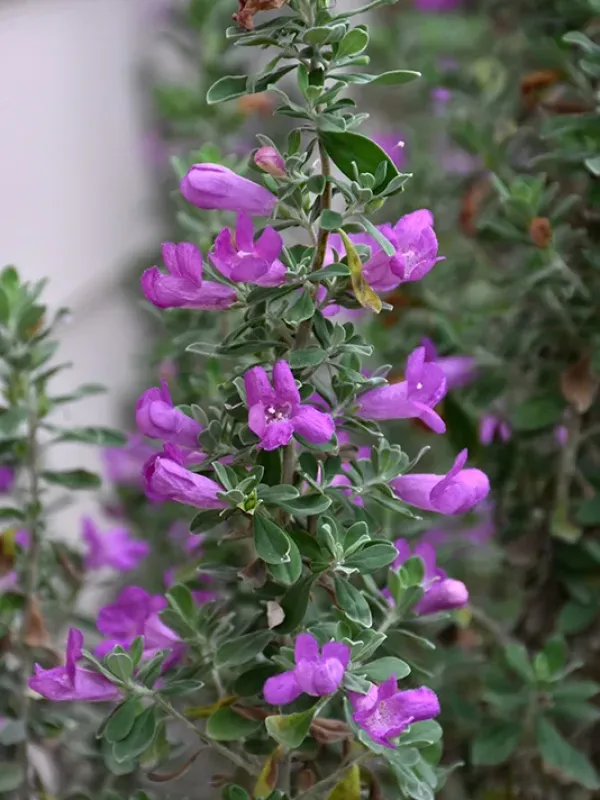
Hybrids between Leucophyllum frutescens and Leucophyllum laevigatum are resilient ornamental shrubs belonging to the Scrophulariaceae family. These plants are specifically bred to combine the vibrant floral displays of the Texas Sage with the refined growth habit of the smooth-leaf varieties.
Originating from the arid regions of Northern Mexico and the Southwestern United States, these hybrids are perfectly adapted to xeriscaping. They exhibit a distinct silver-grey foliage, which acts as a protective layer against intense solar radiation and high ambient temperatures.
The primary soil requirement for these plants is excellent drainage. They thrive in rocky, sandy, or alkaline substrates where water does not pool, as they are highly susceptible to root rot in waterlogged conditions.
Full sun exposure is essential for maintaining the health and compact structure of the shrub. Placing these plants in partial or full shade will cause them to become leggy and significantly reduce their blooming performance during the growing season.
Minimal fertilization is required for these hardy hybrids. In fact, providing too much fertilizer can stimulate excessive vegetative growth at the expense of floral buds and can weaken the plant's natural resistance to environmental stress.
Main diseases and pests
Root rot caused by overwatering is the most significant threat to the survival of these hybrids. Gardeners must ensure that the planting site has sufficient slope or amended soil structure to facilitate rapid drainage after rainfall.
Powdery mildew may occur if the plants are placed in areas with poor airflow. This is particularly problematic in humid climates, where moisture accumulates on the foliage and prevents the leaves from drying out properly during the day.
Pests such as aphids or spider mites are rarely a significant concern due to the dense, pubescent covering on the leaves. When they do appear, simple mechanical removal with a spray of water is typically sufficient to mitigate the population.
Regular sanitation, which includes removing dead or broken branches, is important to maintain the plant's aesthetic quality. This practice also helps keep the inner parts of the bush ventilated, reducing the risk of fungal infections.
Selecting the correct planting zone is critical for the hybrid's overall vigor. In areas with high humidity and cold winters, these plants require extra attention to ensure they do not suffer from moisture-related fungal diseases.