
Leucophyllum candidum
Leucophyllum candidum I. M. Johnst.
Description
Growing requirements
Leucophyllum candidum, commonly known as a species of Texas sage, is an evergreen shrub belonging to the Scrophulariaceae family. It is native to the arid regions of Northern Mexico and the southwestern United States, where it thrives in rocky, nutrient-poor, and well-drained soils.
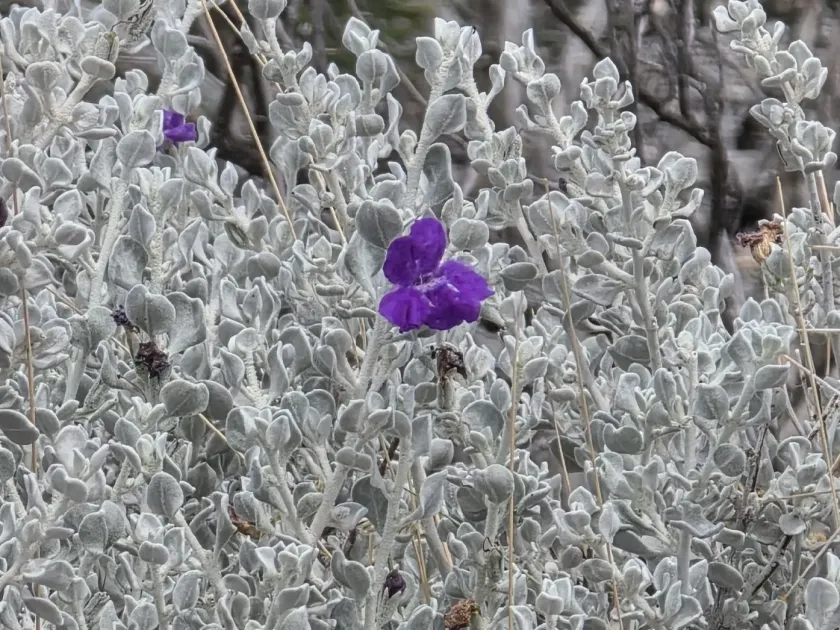
The plant is distinguished by its silvery-white foliage, which is covered with fine hairs, allowing it to withstand intense heat and drought. The shrub blooms with vibrant purple to blue bell-shaped flowers, often triggering its flowering cycle in response to high atmospheric humidity or summer rainfall.
Cultivation requirements prioritize soil drainage above all else. This plant is highly sensitive to moisture accumulation; hence, planting it in heavy, clay-rich soils without amendments will lead to rapid root rot. A sunny, open site with maximum daily sunlight is essential for maintaining its health.
In terms of agricultural practices, L. candidum is a low-maintenance crop. It requires very little fertilization, as excessive nutrients can force vegetative growth at the expense of flower production. Regular pruning is recommended to maintain a dense, attractive shrub shape and to remove dead or straggly branches.
This shrub is highly valued for its role in xeriscaping and sustainable landscaping, as it requires minimal irrigation once established. It is hardy in various desert zones and provides year-round interest with its unique foliage, making it a sustainable choice for water-conscious gardening.
Main diseases and pests
The primary threats to Leucophyllum candidum are pathogenic fungi that attack the root system, usually triggered by overwatering or poorly aerated soil. Maintaining a strict irrigation schedule is the most effective preventative measure against these soil-borne diseases.
While the plant is generally pest-resistant, occasional infestations of scale insects or mites may occur under unfavorable environmental conditions. Monitoring the plant's health and ensuring proper air circulation around the canopy helps minimize the risk of pest proliferation and ensures optimal growth.