
Leucophyllum Frinz
Leucophyllum frutescens (Berland.) I. M. Johnst. x L. pringlei (Greenm.) Standl.
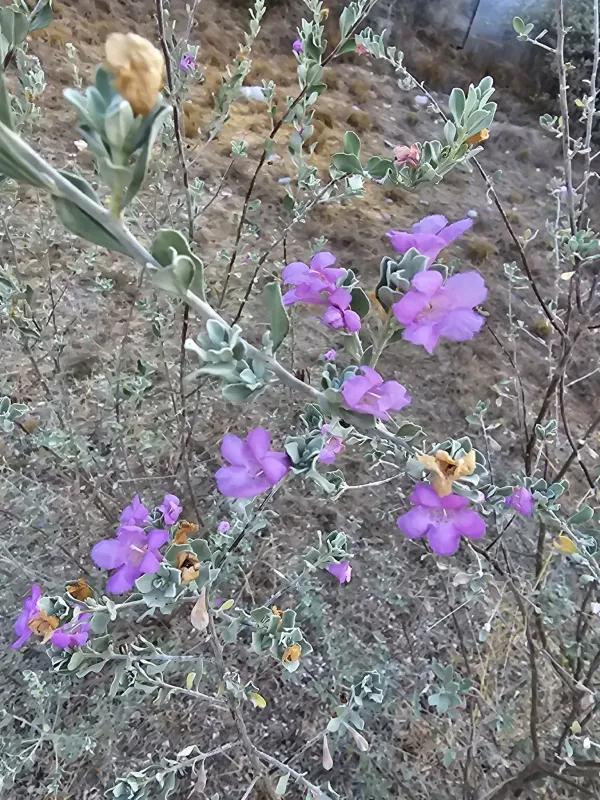
Description
Growing requirements
Leucophyllum Frinz is an interspecific hybrid of Leucophyllum frutescens and Leucophyllum pringlei, belonging to the Scrophulariaceae family. This shrub is highly valued for its striking silver foliage and ability to produce masses of flowers, often triggered by humidity changes.
Originating from the arid regions of Northern Mexico and the Southwestern United States, this plant is perfectly adapted to desert-like environments. It thrives in high-heat conditions and is exceptionally resilient to prolonged periods of drought.
Regarding site requirements, full sun exposure is non-negotiable. To maintain a dense, compact growth habit, the shrub needs at least 6 to 8 hours of direct sunlight daily. Planting in partial shade usually results in legginess and significantly reduced flowering potential.
Soil drainage is the most critical aspect of the plant's agrotechnics. It demands gritty, fast-draining soil to prevent root rot. If the native soil is dense or clay-heavy, planting in raised beds is highly recommended to ensure moisture does not pool around the roots.
The plant is highly tolerant of various soil types provided they are not waterlogged. It thrives in alkaline soils and is remarkably resistant to saline conditions, making it an excellent candidate for coastal landscaping or roadside plantings where salt spray is a concern.
Main diseases and pests
The primary threat to Leucophyllum Frinz is overwatering, which quickly leads to root rot and crown decay. Once a plant is affected by soil-borne fungal pathogens due to poor drainage, recovery is often difficult or impossible.
During humid and overcast seasons, foliage may be susceptible to powdery mildew. This fungal issue manifests as white, dusty spots on the leaves, which can be mitigated by ensuring proper plant spacing and airflow.
Insects like whiteflies or aphids may occasionally colonize the soft, new growth, especially if the plant has been over-fertilized with nitrogen. Maintaining a slow-release, low-nitrogen feeding schedule helps keep the growth rate natural and less attractive to pests.
Spider mites can become a nuisance during extremely dry and hot weather cycles. Regular monitoring of the underside of leaves can help detect early infestations, which are best treated with horticultural oils or insecticidal soaps.
Proper pruning is essential for maintaining plant health. By thinning the center of the shrub, gardeners can prevent microclimates of high humidity within the dense foliage, thereby significantly reducing the risk of fungal infections and pest outbreaks.