
Leucophyllum hybrid
Leucophyllum frutescens (Berland.) I. M. Johnst. x L. candidum I. M. Johnst.
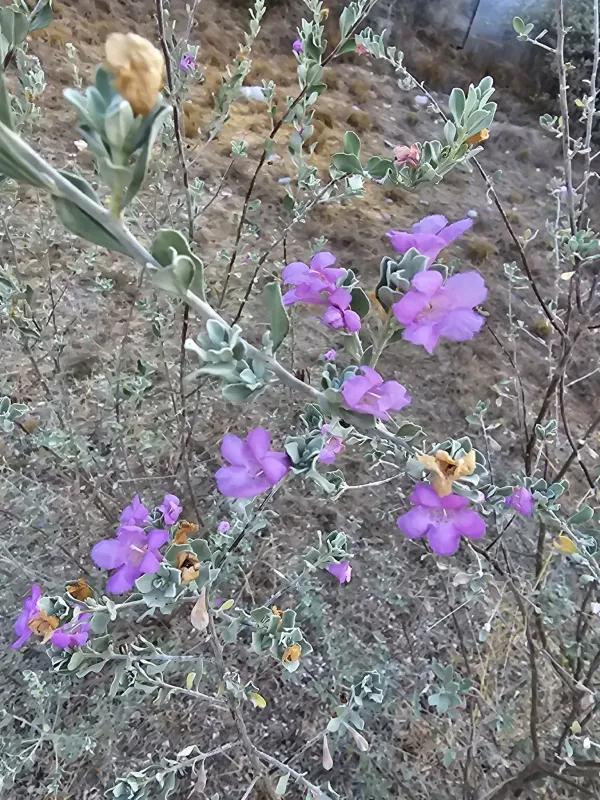
Description
Growing requirements
The Leucophyllum hybrid is a resilient, evergreen shrub belonging to the Scrophulariaceae family. It is a highly valued cross between Leucophyllum frutescens and Leucophyllum candidum, bred for its superior drought tolerance and ability to thrive in harsh, semi-arid environments where other ornamental shrubs often fail.
Regarding soil requirements, this shrub demands excellent drainage to prevent root health complications. It is best suited for sandy, rocky, or gravelly soils where water permeability is high; heavy clay soils often lead to fatal rot and must be amended or raised to ensure success in landscape plantings.
Light exposure is the most critical factor for this plant's growth and aesthetics. As a heliophilous species, it requires full, direct sun exposure throughout the day to maintain a dense, compact habit and to trigger the intense bloom flushes that characterize the genus during humid weather conditions.
The plant is perfectly adapted to climates with intense heat and low ambient humidity. It is exceptionally tolerant of high temperature fluctuations, making it an ideal candidate for desert regions or areas with hot, dry summers where water conservation is a priority in municipal and residential landscape maintenance.
Agricultural and landscaping utility for this cultivar is focused on xeriscaping. Its natural resistance to pests, minimal nutritional needs, and low water requirements make it an efficient choice for creating low-maintenance borders, privacy screens, and ornamental hedges in arid or semi-arid climate zones.
Main diseases and pests
The primary threats to the Leucophyllum hybrid are related to improper irrigation practices. Overwatering or planting in locations prone to flooding creates anaerobic soil conditions, which rapidly trigger fungal root rot pathogens such as Phytophthora, leading to sudden wilting and plant death.
While relatively pest-resistant, the plants can occasionally be affected by sucking insects such as mealybugs or scale. These infestations typically occur when the plant's natural defense mechanisms are weakened by insufficient light or poor soil aeration, necessitating prompt identification and integrated pest management.