
Leucophyllum hybrid
Leucophyllum frutescens (Berland.) I. M. Johnst. x Leucophyllum zygophyllum I. M. Johnst.
Description
Growing requirements
Leucophyllum hybrid is a resilient evergreen shrub derived from the crossing of Leucophyllum frutescens and Leucophyllum zygophyllum. It belongs to the Scrophulariaceae family, known for its ability to thrive in harsh, arid environments where other ornamental plants struggle to survive.
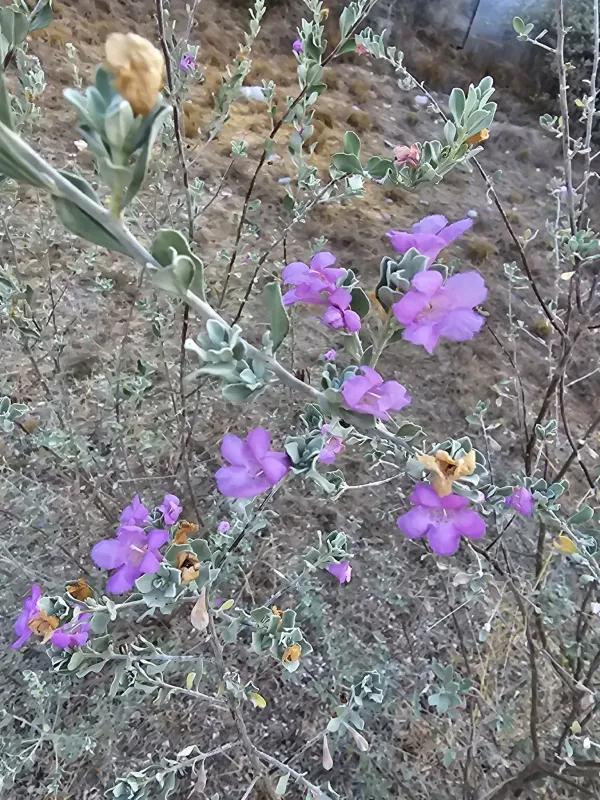
The plant is distinguished by its silvery, pubescent leaves that act as a natural mechanism to reflect sunlight and minimize water loss through evaporation. Its funnel-shaped flowers, blooming in shades of violet or lavender, provide a striking contrast against the foliage, especially after humidity spikes.
Optimal growth requires full sun exposure and extremely well-draining soil. This plant is highly sensitive to root moisture, making sandy or rocky soils the ideal medium for cultivation. Avoiding waterlogged conditions is essential, as the species is prone to rapid decay in poorly aerated environments.
Agricultural management for this shrub is minimal. Once established, it is highly drought-tolerant and requires almost no supplemental irrigation. Pruning should be managed sparingly to maintain the plant's natural shape, as excessive fertilization and heavy trimming can severely reduce its longevity and blooming capacity.
In landscaping, this hybrid is widely used for dry gardens, xeriscaping projects, and low-maintenance privacy screens. Its ability to withstand intense heat and reflected light from pavements makes it a versatile choice for modern urban landscaping in semi-arid and desert climates.
Main diseases and pests
Root rot remains the primary threat to Leucophyllum hybrid, almost exclusively triggered by improper irrigation or heavy clay soils that do not allow for adequate drainage. Maintaining a dry, well-ventilated root zone is the most effective cultural practice to prevent this common pathogen.
While generally pest-resistant, the plant can occasionally suffer from infestations of spider mites or aphids during extreme heat waves when the plant is under environmental stress. These pests are usually managed through consistent plant health monitoring and localized treatment if necessary.
Sanitation is a key component of disease control for this species. Removing dead or crossing branches improves air circulation through the canopy, which significantly reduces the humidity levels that favor fungal growth on leaves and stems during atypical rainy seasons.
Chemical intervention should be considered a last resort. Because the shrub attracts various pollinators, including bees and butterflies, the use of systemic insecticides should be avoided to prevent harming these beneficial populations that frequent the colorful flowers throughout the growing season.
Regular inspection of the foliage is recommended to catch potential issues early. By maintaining the correct soil pH and moisture levels, growers can create an environment where the plant remains naturally vibrant and resistant to both systemic diseases and localized pest outbreaks.