
Leucadendron uliginosum
Leucadendron uliginosum
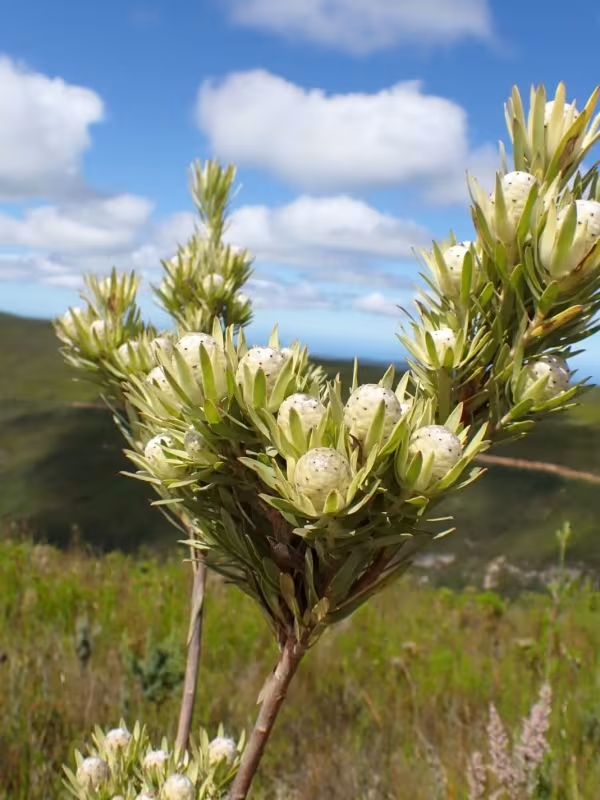
Description
Sowing dates
Leucadendron uliginosum, a member of the Proteaceae family, is a unique horticultural crop that requires precise conditions for seed germination and propagation.
Seeds are typically sown in autumn, utilizing a well-draining, acidic, and nutrient-poor substrate that mimics their natural South African habitat.
Germination is most successful when seeds are subjected to fluctuating temperatures, reflecting natural day and night cycles, and kept in a bright, well-ventilated space.
Seedlings should be handled with extreme care due to the sensitive nature of their proteoid root systems, which are prone to damage during transplanting.
Propagation via cuttings is also a common professional practice, which helps ensure genetic uniformity and faster establishment of the crop in greenhouse environments.
Growing requirements
This species thrives in areas with full sun exposure and requires excellent soil aeration to prevent root rot and other fungal diseases.
Soil requirements are strict: the pH should be acidic, and the medium must be free of significant organic matter or high phosphorus levels, as these can be toxic to the plant.
Watering must be managed carefully, using only low-salt, soft water; high mineral content in water will quickly lead to salt accumulation and plant stress.
Temperature management is critical, as Leucadendron uliginosum prefers cool, well-ventilated nights and cannot tolerate prolonged periods of high humidity.
In regions outside its natural range, cultivation is usually performed in greenhouses or controlled environments where climate parameters can be adjusted.
Main diseases and pests
Root pathogens, particularly Phytophthora species, represent the most significant threat to the health and longevity of Leucadendron crops.
Excessive humidity combined with stagnant air creates an ideal environment for foliage diseases, which can rapidly diminish the aesthetic value of the harvest.
Pests such as scale insects and spider mites are frequent nuisances, particularly in protected cultures where environmental checks are not strictly enforced.
Integrated pest management protocols are recommended to mitigate damage while maintaining the safety of the plant's delicate tissues.
Prevention relies on strict hygiene, the use of sterile growing media, and ensuring that no infected material is introduced into the cultivation area.
Harvesting
Leucadendron uliginosum is primarily harvested for the high-value cut flower industry, where its unique bracts are highly sought after by florists.
The optimal harvest time is when the bracts have fully developed their structural integrity and coloration, ensuring long-lasting display in arrangements.
Once harvested, the stems should be processed immediately by trimming and placing them in clean, fresh water to prevent wilting.
Proper post-harvest cooling and humidity control are necessary to extend the vase life of the cut stems before they are shipped to international markets.
Beyond fresh use, the plant is also marketed as a dried decorative element, maintaining its shape and colour for extended periods in home and commercial decor.