
Leucadendron discolor
Leucadendron discolor E. Phillips & Hutch.
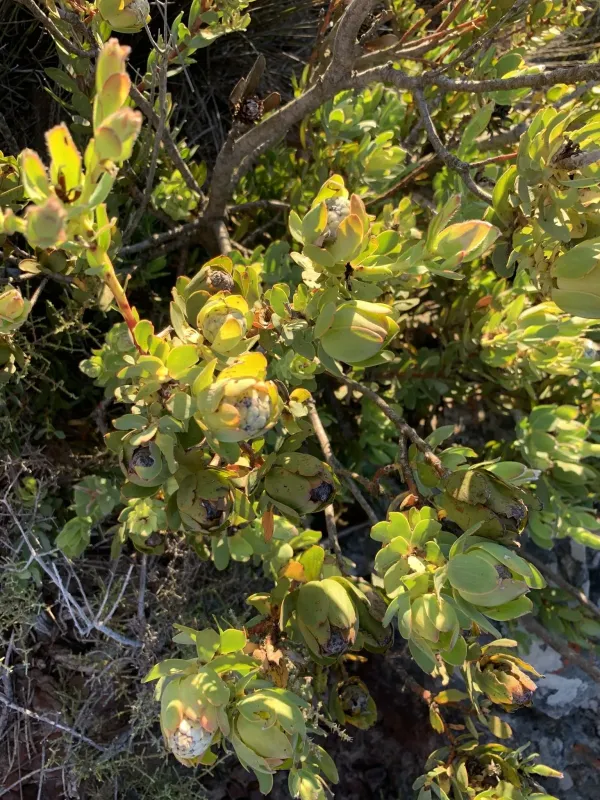
Description
Sowing dates
Propagation of Leucadendron discolor via seeds requires specific preparation methods to overcome seed dormancy, often involving smoke treatment.
The optimal sowing time is late spring or early summer when sustained warmth encourages rapid germination and vigorous initial growth.
The substrate must be extremely well-draining, typically consisting of a mix of coarse sand and peat, ensuring minimal nutrient content.
Seeds should be covered with a very thin layer of medium and kept in a bright location, avoiding extreme heat or direct scorching sun.
Young seedlings should be transplanted into individual pots as soon as they develop their first set of true leaves to prevent root crowding.
Growing requirements
This species belongs to the Proteaceae family and thrives in acidic, nutrient-poor, and well-drained soils typical of the Cape Floristic Region.
High light intensity is fundamental for the plant's health; it requires full sun to develop its characteristic vibrant foliage and bracts.
Watering management is crucial: while the plant needs moisture, it is highly sensitive to waterlogging, which often leads to rapid decay.
Leucadendron discolor prefers a climate with mild winters and warm, dry summers, making it suitable for Mediterranean-type environmental conditions.
Fertilizer application should be avoided or limited to specialized low-phosphorus products, as standard fertilizers can severely damage the root system.
Main diseases and pests
Root rot caused by Phytophthora species is the most severe threat, often arising from poorly drained soil or over-irrigation practices.
Insects like mealybugs and scale insects are common pests that feed on the foliage and can significantly reduce the plant's ornamental quality.
Poor ventilation within greenhouses can lead to the proliferation of fungal spores, including powdery mildew, on the leaves and branches.
The use of clean, disease-free propagation material is essential to prevent the spread of soil-borne pathogens in commercial nurseries.
Regular monitoring and integrated pest management strategies are necessary to maintain healthy plants and ensure maximum productivity.
Harvesting
Harvesting is performed when the colorful bracts are fully developed, ensuring the aesthetic appeal required for the premium floral market.
Stems must be cut with sharp, sterilized tools to ensure clean wounds and prevent the introduction of pathogens into the main plant structure.
After harvest, the stems exhibit excellent vase life, which contributes to the high commercial value of this species in international trade.
It is vital not to prune the plant too aggressively during harvest to preserve enough foliage for continued photosynthesis and future growth.
Following the harvest season, the plants should be inspected for damage and allowed to recover before the next flush of vegetative growth begins.