
Leucadendron conicum
Leucadendron conicum (Lam.) I. Williams
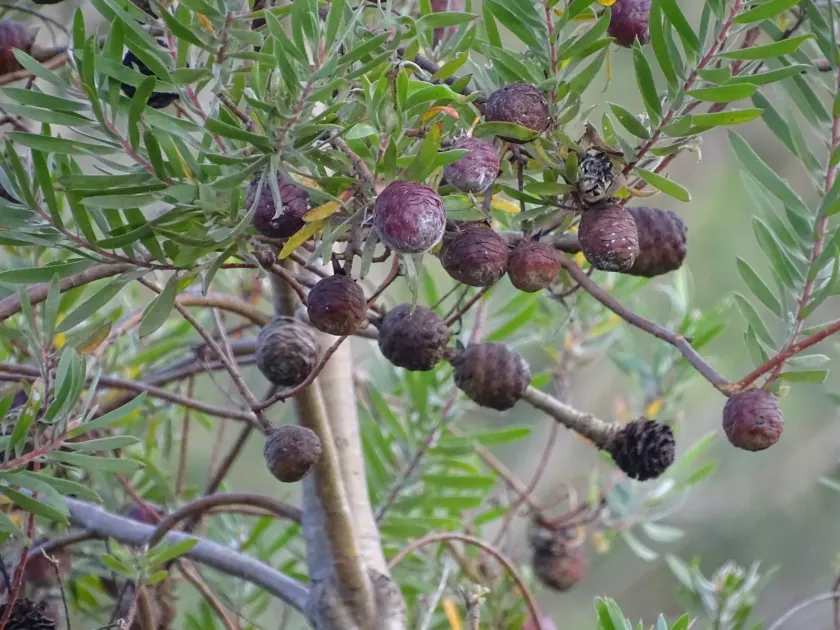
Description
Growing requirements
Leucadendron conicum is a woody shrub belonging to the Proteaceae family, native to the fynbos regions of South Africa. It is a highly specialized horticultural crop that thrives in Mediterranean-type climates with cool, wet winters and warm, dry summers.
The crop requires full sun exposure to develop its characteristic conical bracts. Shaded areas lead to poor structural development and diminished color intensity in the flower-like structures.
Soil conditions are the most critical factor for successful cultivation. The plant requires acidic, well-draining, sandy-loam soils with low fertility levels. Heavy soils often lead to fatal root rot caused by stagnant water.
Leucadendron species are extremely sensitive to phosphorus toxicity. Fertilizer applications must be carefully calculated, as standard commercial fertilizers are often too rich in phosphates for this genus.
Climate control includes protection from severe frost. While the plant can tolerate light frost, extended freezing periods will damage the apical buds, affecting the harvest of the following season.
Main diseases and pests
The primary pathogenic threat to Leucadendron conicum is the Phytophthora root rot complex. This soil-borne pathogen is almost impossible to eradicate once established, making preventative drainage management the only effective defense.
Insect pests such as mealybugs and scale insects pose significant risks. They congregate in the leaf axils and on stems, extracting sap and weakening the plant's structural integrity.
High humidity combined with poor airflow often leads to Botrytis infections on the bracts. This is particularly problematic in protected cultivation (greenhouses) if ventilation is not strictly controlled.
Nutrient imbalances, particularly high pH levels, can induce iron chlorosis. Maintaining soil acidity at a pH level between 5.0 and 6.0 is vital for nutrient uptake and overall plant vigor.
Weed control should be conducted manually rather than mechanically to avoid damaging the shallow, sensitive root system, which can serve as entry points for various soil pathogens.
Harvesting
In commercial floriculture, Leucadendron conicum is highly valued for its long-lasting, architecturally interesting stems. It is a staple in the high-end cut flower market globally.
Harvesting is performed when the bracts have reached their optimal size and color. Cut stems are trimmed using sterilized, sharp tools to minimize stress and prevent the transmission of vascular diseases between plants.
Post-harvest care involves immediate hydration in clean water. The inclusion of professional-grade floral preservatives helps in controlling bacterial growth within the vessels, ensuring maximum vase life.
Storage should occur in a refrigerated environment at 4°C to 7°C. It is essential to maintain vertical storage to prevent stem bending and deformation of the conical structures.
Grading is based on stem length, the uniformity of bract development, and the absence of leaf necrosis. The final product is packed in specialized flower boxes for long-distance transport.