
Leucadendron salignum
Leucadendron salignum P. J. Bergius
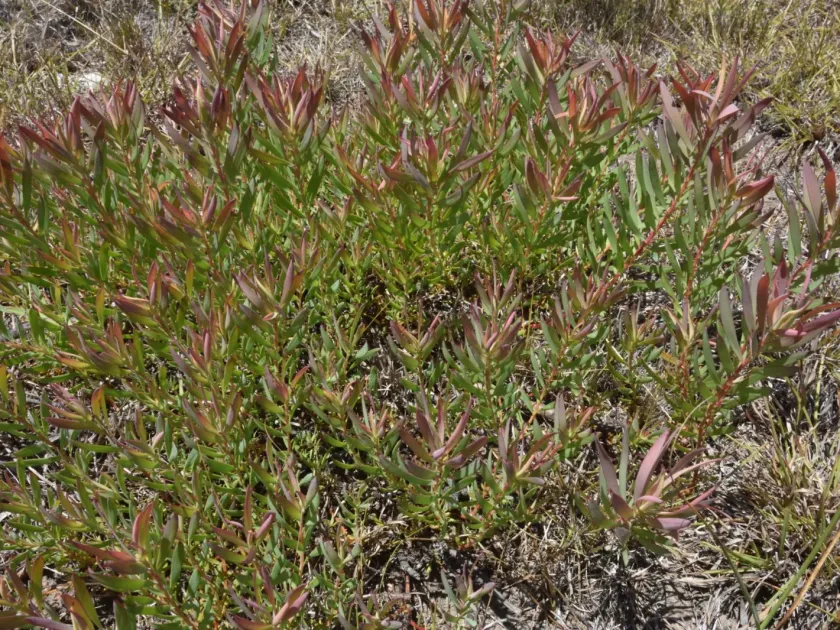
Description
Sowing dates
Leucadendron salignum is a member of the Proteaceae family, native to South Africa, and is primarily propagated via seeds or semi-hardwood cuttings.
Seeds require a well-drained, acidic, and nutrient-poor sandy medium to germinate effectively, mimicking their natural fynbos habitat.
For optimal results, seeds should be sown in late summer, as fluctuating temperatures between day and night are known to trigger the germination process.
Commercial growers prefer vegetative propagation through cuttings, which ensures uniformity in color and growth habit among all plants in a crop batch.
Cuttings are treated with rooting hormones and kept in high-humidity propagation chambers with bottom heat to encourage rapid root development.
Growing requirements
The soil must be highly acidic, with a pH range of 5.0 to 6.0, and must have exceptional drainage to prevent the roots from drowning.
Leucadendron salignum thrives in full sunlight, which is essential for producing the vibrant bracts that make this plant highly sought after in floristry.
The plant is sensitive to phosphorus, so fertilizers used must be extremely low in this element to avoid toxicity and root damage.
Climatic conditions must be mild, as the species is sensitive to heavy frost; in colder regions, it should be grown in greenhouses or pots.
Proper air circulation is non-negotiable to maintain plant health and prevent the buildup of humidity that leads to fungal outbreaks.
Main diseases and pests
The most significant threat to Leucadendron is Phytophthora root rot, which is almost always fatal if the soil does not drain perfectly.
Pests like mealybugs and spider mites are common in greenhouse environments and can cause significant damage to the soft, developing foliage.
Fungal leaf spot can occur if the foliage remains wet for extended periods, necessitating the use of drip irrigation rather than overhead watering.
Integrated pest management, including regular inspection and the use of targeted biological controls, is vital for maintaining high-quality crop yields.
Maintaining a clean, sterile growing environment is the best defense against soil-borne pathogens that thrive in warm, damp conditions.
Harvesting
Harvesting is focused on the colorful bracts, which are cut when they are firm and have attained their full, intended aesthetic color.
Plants are harvested using sanitized, sharp blades to ensure clean cuts, which allows for better healing of the remaining stem and shrub health.
Post-harvest care involves immediate processing, including grading for stem length and bunching for transport to international markets.
Cooling the stems immediately after harvest is essential to reduce ethylene sensitivity and preserve the vase life of the floral stems.
Properly packed, these stems are known for their durability and long life as cut flowers, making them a premium product in the global floral trade.