
Leucadendron floridum
Leucadendron floridum R. Br.
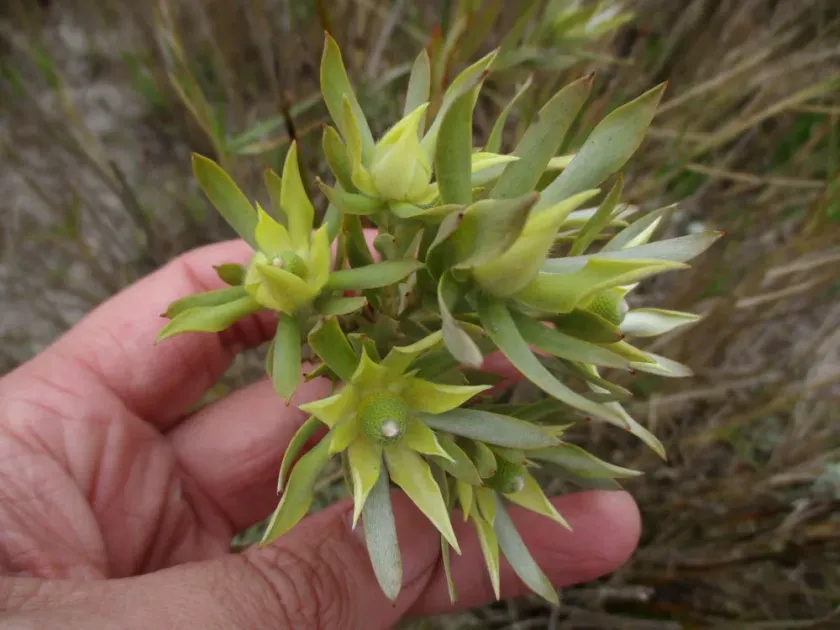
Description
Growing requirements
Leucadendron floridum is a striking evergreen shrub belonging to the Proteaceae family, native to the Western Cape of South Africa. It is widely recognized in agriculture for its silvery, ornamental foliage, which serves as a highly sought-after component in professional floristry.
The cultivation of this species requires well-draining, acidic, nutrient-poor soil. It is highly sensitive to phosphorus levels, and over-fertilization can be lethal to the plant. Proper soil preparation, including sand-based substrates, is essential for healthy root development.
Climate requirements include plenty of full sun and good ventilation. Being a Mediterranean-climate species, it thrives in regions with wet, cool winters and dry, warm summers. In colder climates, it must be grown in specialized greenhouses with strict temperature control.
Irrigation management is crucial; the plant requires consistent, moderate moisture but absolutely no waterlogging. Drip irrigation systems are preferred in commercial settings to deliver precise amounts of water directly to the base of the plant without wetting the foliage.
Propagation is typically achieved through cuttings taken from semi-hardwood stems. These cuttings require careful handling, root-promoting hormones, and a humid environment to ensure successful rooting before transplanting to permanent beds.
Main diseases and pests
The primary threats to Leucadendron floridum are root-rotting fungi, particularly Phytophthora species, which thrive in poorly drained or waterlogged soils. Prevention involves using certified disease-free soil and maintaining rigorous sanitary conditions.
Pests such as mites and aphids can occasionally infest the foliage, especially in greenhouse conditions where air circulation is limited. Integrated pest management strategies, focusing on biological controls, are recommended over heavy chemical applications.
Systemic diseases often result from stress due to improper soil pH or excessive fertilizer application. Maintaining a strict monitoring program for leaf discoloration or wilting allows for early intervention and mitigation of plant losses.
Weed management in the plantation is essential to prevent competition for nutrients and water. Mechanical weeding is preferred, as deep cultivation may damage the sensitive, shallow root system characteristic of the Proteaceae family.
Periodic pruning is not only used for harvest but also serves as a phytosanitary measure, removing old or infected plant tissue. This keeps the shrubs vigorous and reduces the buildup of inoculum that could lead to widespread disease outbreaks.
Harvesting
Harvesting Leucadendron floridum involves selecting stems with fully developed, vibrant bracts. The timing of the harvest is critical to ensure the longevity of the stems in subsequent floral arrangements, as premature cutting leads to wilting.
Cut stems are immediately hydrated in clean, acidified water to prevent air embolism in the vascular tissues. Standard commercial post-harvest treatment includes dipping the stems in fungicides to prevent microbial growth in the water containers.
Sorting by length and quality is the next step, ensuring that each batch meets international floral market standards. Packaging must provide protection against physical damage to the leaves while allowing for sufficient airflow to prevent moisture buildup.
Storage at low, stable temperatures is necessary to maintain the freshness of the product during transit. Proper management during this stage significantly increases the market value and reduces post-harvest losses for the agricultural producer.
Sustainable harvesting practices are essential for long-term productivity. By pruning the stems at the correct points, farmers encourage new vegetative growth, ensuring a continuous supply for the next harvest cycle throughout the flowering season.