
Leucadendron
Leucadendron salicifolium x Leucadendron procerum
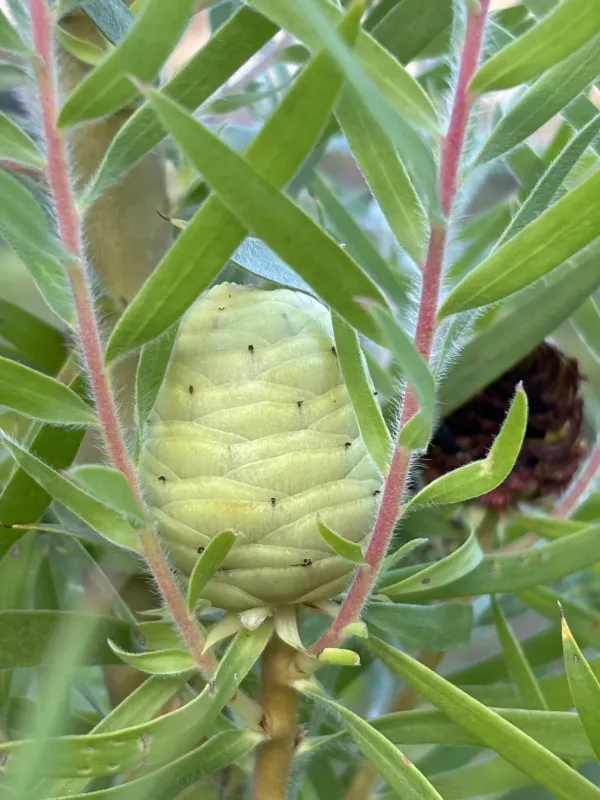
Description
Sowing dates
Propagation of this hybrid is strictly performed through vegetative cuttings to ensure the stability of the plant's unique phenotypic characteristics, as seed propagation would lead to high variability.
Cuttings are selected during the semi-hardwood phase, usually late in the growing season. This ensures that the plant tissue is mature enough to develop a robust root system while remaining active for growth.
A well-draining, acidic substrate consisting of perlite and peat is essential for rooting. The medium must be kept moist but never saturated to avoid the development of pathogens during the sensitive rooting phase.
Temperature control is vital during the rooting period, with optimal values ranging between 18 and 22 degrees Celsius. Supplemental misting systems are often used to maintain humidity levels without wetting the foliage excessively.
Once roots are established, the young plants are transplanted into containers. This transition must be handled with care to avoid disturbing the sensitive proteoid roots, which are prone to damage.
Growing requirements
The hybrid belongs to the Proteaceae family, which is notorious for its intolerance to high soil phosphorus levels. Fertilizer programs must be carefully formulated to avoid toxic accumulations of this element.
The soil must have a low pH level, typically between 5.0 and 6.0, to facilitate the uptake of micronutrients. Alkaline soils are detrimental and will quickly lead to severe nutrient deficiencies and stunted growth.
Light intensity is a critical driver for productivity. These plants require full sun exposure to produce the vibrant, colorful bracts that define their commercial value in the floral industry.
Excellent soil drainage is the most important cultural requirement. In greenhouse environments, raised beds or specialized container setups are preferred to prevent water from pooling around the root zone.
Water quality must be strictly monitored. The use of hard water, rich in carbonates, will gradually shift the soil pH, leading to physiological issues that can easily ruin the crop over time.
Yield
The yield of this crop is quantified by the number of marketable stems produced per bush per season. Proper pruning practices are the primary method of managing and increasing this output.
Commercial longevity of a single plant averages about 5 to 7 years. Yields typically increase during the first few years as the crown develops, reaching a peak before declining as the plant reaches senescence.
High-quality stems must have straight, clean stalks and fully colored bracts. Grading is strictly based on stem length and the density of the inflorescence, which determines the price point on the market.
Productivity is highly sensitive to the climate within the greenhouse. Temperature fluctuations can trigger premature flowering or delay the harvest, making consistent climate control a top priority.
Effective plantation management involves consistent scouting for plant health and optimizing irrigation scheduling to ensure that water usage translates directly into stem growth and bract quality.
Main diseases and pests
Phytophthora root rot is the most devastating disease for this genus. It is often triggered by poor drainage or overwatering, making the plants highly susceptible to fatal infection.
Insects like mealybugs and spider mites are common pests that thrive in the protective environment of a greenhouse. These pests can damage the foliage and bracts, significantly lowering the commercial grade.
Chlorosis is a common physiological condition caused by incorrect soil pH or imbalances in micronutrient uptake, such as iron or manganese deficiency, often resulting from poor water quality.
Integrated Pest Management (IPM) is highly recommended. By maintaining rigorous hygiene protocols and using biological controls, growers can significantly minimize the reliance on chemical pesticides.
Early detection of any stress symptoms is essential. If a plant appears wilted or discolored, it should be quarantined immediately to prevent potential pathogens from spreading through the irrigation water.
Harvesting
Harvesting is performed using sharp, sanitized pruning shears. Each cut is made with precision to leave enough foliage on the plant for continued energy production and future vegetative growth.
The timing of the harvest is critical; the bracts must be fully developed and colored, yet not so mature that the inner flowers begin to drop or fade, which would decrease the vase life.
Immediately after harvest, stems are hydrated in cool, clean water. Using floral preservatives helps prevent vascular blockages caused by bacterial buildup, ensuring the flowers stay fresh during transit.
Post-harvest handling involves moving the product into a refrigerated environment. Maintaining low temperatures is crucial to slowing down the plant's metabolic rate and preserving its aesthetic quality.
After the harvest season, the bushes undergo a systematic pruning to maintain their shape and size, which is vital for the next year's crop and the overall health of the plantation.