
Willow-leaf Conebush
Leucadendron salicifolium (Salisb.) I. Williams
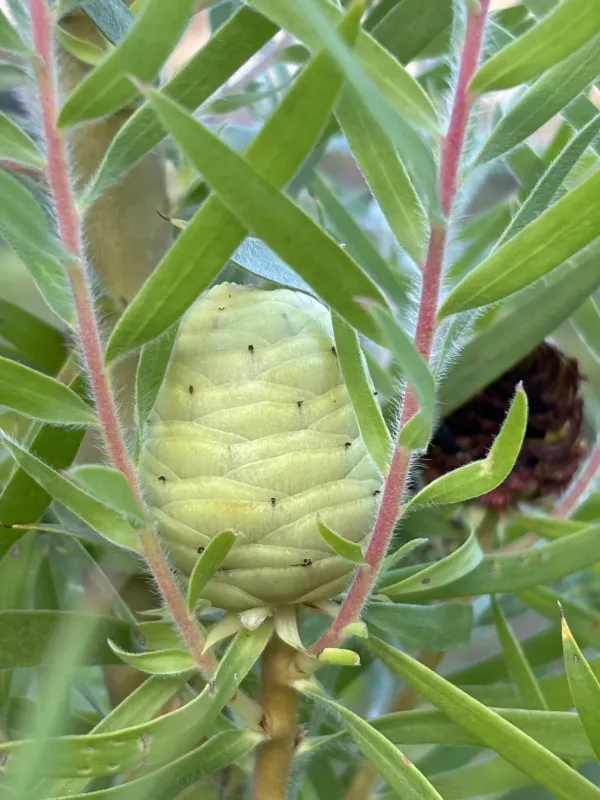
Description
Growing requirements
Leucadendron salicifolium, known as the Willow-leaf Conebush, is an evergreen shrub belonging to the Proteaceae family. Native to the Western Cape of South Africa, it has evolved in a Mediterranean-type climate with dry, hot summers and mild, wet winters.
Cultivation requires well-drained, acidic to neutral soils. The plant is highly intolerant of waterlogged conditions, making proper soil drainage or elevated planting beds essential to prevent root zone hypoxia and subsequent decay.
This species thrives in full sun, which is necessary for the development of its distinctive colorful bracts. It requires good air circulation to mitigate the risk of fungal infections, particularly in humid production environments.
The agronomy is unique due to the presence of proteoid roots, which are specialized clusters of rootlets that efficiently extract phosphorus from nutrient-poor soils. Consequently, standard fertilizers, especially those high in phosphorus, should be avoided to prevent plant toxicity.
In terms of commercial utility, this culture is highly prized in the cut flower industry. Its long-lasting bracts and architectural foliage make it a premium product for high-end floral designs and export markets.
Main diseases and pests
Phytophthora root rot is the most significant threat to Leucadendron plantations, often exacerbated by high soil moisture levels or poor drainage systems.
Fungal diseases, such as leaf spots, can proliferate under conditions of high humidity and poor ventilation, necessitating proactive canopy management.
Insect pests, including mealybugs and spider mites, are common in greenhouse conditions and require regular monitoring and integrated pest management (IPM) strategies.
Nematode infestations can severely compromise the plant's vigor, as they damage the delicate proteoid root system and inhibit nutrient uptake.
Effective management relies on selecting disease-free planting material, maintaining strict hygiene in nursery operations, and ensuring optimal soil water balance throughout the growing cycle.
Harvesting
Harvesting should occur once the colorful bracts are fully developed and hardened, ensuring the stems are sufficiently mature for long-distance transport.
Clean, disinfected shears are required for cutting to minimize the transmission of pathogens between individual plants in the field.
It is best to harvest during the early morning to ensure that the stems are fully hydrated, which significantly increases the vase life of the final product.
Post-harvest handling involves sorting by stem length and quality, followed by careful packing to prevent physical damage to the delicate floral structures.
Maintaining the cold chain after harvest is crucial for preserving the quality of the Willow-leaf Conebush stems for export and retail distribution.