
Leucadendron procerum
Leucadendron procerum (Salisb.) I. Williams
Description
Sowing dates
Leucadendron procerum is a member of the Proteaceae family, which typically requires seed stratification to break dormancy. Successful propagation in a nursery setting mimics natural conditions, where temperature fluctuations play a key role in stimulating germination.
Autumn is the preferred season for sowing, as it aligns with the natural cycle of the species in its native habitat. The growing medium must be nutrient-poor, specifically avoiding fertilizers with high phosphorus content, which can be lethal to the developing root systems.
Smoke treatment or the use of smoke-infused water is a standard practice to enhance germination rates for these seeds. Ensuring adequate ventilation and strict control over moisture levels prevents the development of damping-off fungi during the early stages of seedling development.
Once the seedlings develop their first true leaves, they should be carefully pricked out into individual pots. Because these plants have sensitive proteoid roots, minimal disturbance during transplanting is essential for their long-term health and vigor.
Cuttings can also be used for vegetative propagation, provided that healthy, disease-free parent plants are selected. The use of specialized rooting hormones and a well-draining, acidic substrate is necessary to achieve high success rates in commercial propagation.
Growing requirements
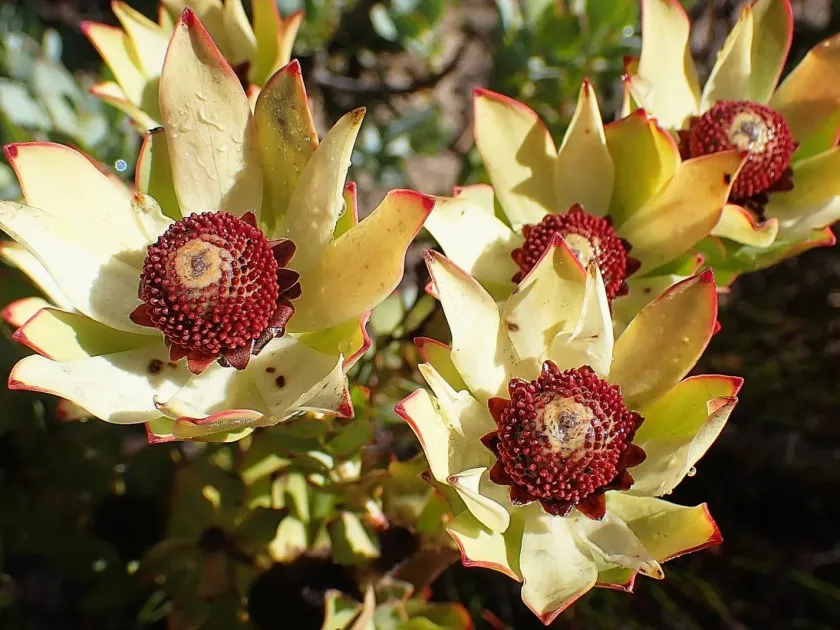
This species is native to South Africa, requiring a Mediterranean climate characterized by dry summers and mild, moist winters. Full sun exposure is non-negotiable, as even partial shade significantly diminishes the plant's ability to produce its characteristic colorful bracts.
The soil must be highly acidic, well-draining, and low in nutrients, especially phosphorus. Regular garden soil is usually unsuitable due to the risk of root rot and the plant's inability to handle heavy clay or nutrient-rich conditions that favor competitive pathogens.
In regions outside its natural range, cultivation should be carried out in greenhouses with precise environmental controls. High humidity should be avoided, and sufficient airflow is required to prevent the onset of fungal infections that thrive in stagnant conditions.
Watering should be performed exclusively with low-alkalinity water, as calcium and chlorine content can quickly shift the soil pH, leading to physiological disorders. Irrigation must be measured to maintain consistent moisture without leaving the root zone waterlogged.
Leucadendron procerum is naturally adapted to withstand strong coastal winds, making it a robust option for landscape architecture in seaside locations. However, young plants require structural support to ensure they establish a straight and strong main stem.
Yield
The economic yield of this crop is measured by the number of marketable stems with vibrant bracts produced per plant. High-quality yield is achievable only when the plant is given sufficient space and the specific nutritional conditions required for mature growth.
Productivity peaks between the third and fifth years, provided that the plants have been pruned correctly to stimulate dense branch formation. Strategic pruning ensures that the plant does not become top-heavy and maintains a consistent output of flowers annually.
The long vase life of the cut foliage and bracts makes this species a highly desirable product in international floral markets. Proper post-harvest handling, including rapid cooling and careful packaging, is essential to maintain the quality of the stems during transit.
Breeding programs focusing on color intensity and stem straightness have significantly improved the profitability of this crop. Growers often select specific clones that demonstrate higher resilience and better aesthetic value for luxury floral arrangements.
Regular monitoring of plant health and nutrient status is vital to maintain consistent annual production. Over-harvesting or improper cutting techniques can lead to a decline in plant vigor, significantly impacting the total yield for subsequent seasons.
Main diseases and pests
Phytophthora root rot is the most serious threat to Leucadendron plantations, often resulting in total crop failure if drainage is not managed correctly. Once infected, plants rarely recover, making prevention through soil sterilization and proper irrigation the only viable strategy.
Pests such as mealybugs and spider mites can infest plants in greenhouse environments, particularly if the air is too dry or ventilation is poor. Early detection and the use of targeted biological controls are preferred over broad-spectrum pesticides, which can harm the plants.
Gray mold (Botrytis cinerea) can cause significant damage to the floral bracts during periods of high humidity. Proper spacing between plants is crucial to facilitate air movement and reduce the moisture accumulation that encourages fungal growth on the leaves.
Chlorosis is a common physiological problem caused by improper soil pH, which restricts the plant's ability to uptake iron and other essential micronutrients. Maintaining the correct acidic balance is the primary method of preventing yellowing and stunted growth.
Sooty mold may develop as a secondary issue following infestations by sap-sucking insects that secrete honeydew. While not a direct parasite, it inhibits photosynthesis and reduces the overall decorative appeal of the foliage, necessitating prompt pest control.