
Leucadendron laureolum
Leucadendron laureolum (Lam.) Fourc.
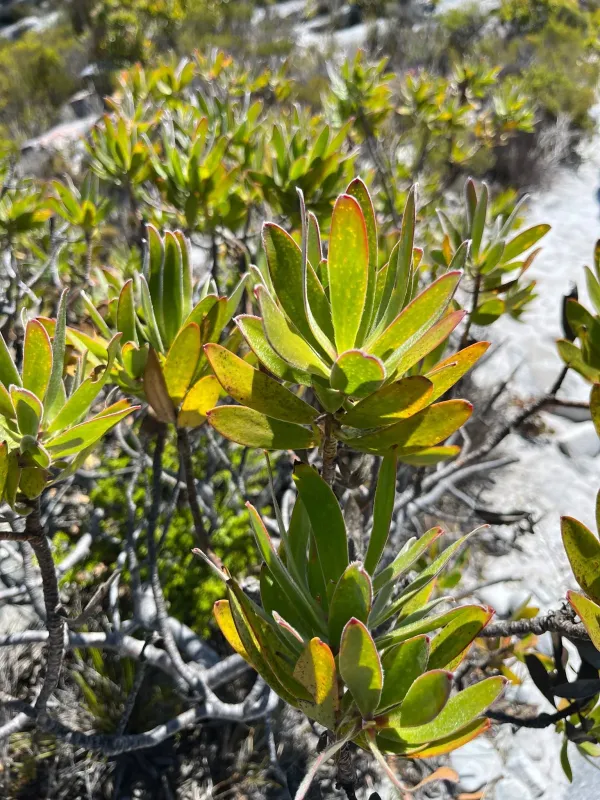
Description
Sowing dates
Leucadendron laureolum is a perennial shrub belonging to the Proteaceae family, native to the Cape Floristic Region of South Africa where it thrives in specific ecological niches.
Commercial propagation is typically achieved through seeds or stem cuttings, which require controlled greenhouse environments to maintain high humidity and stable temperatures for rooting.
The optimal sowing time is during spring when increasing daylight hours stimulate germination and early vegetative development of the young plants.
Cuttings must be placed in well-draining, acidic, and nutrient-poor media, as the root system is extremely sensitive to fertilizers and prone to decay in rich soils.
Transplanting requires extreme precision, as the protea root system is highly delicate and can be irreparably damaged by root disturbance during the potting process.
Growing requirements
This species requires full sun exposure to maintain its compact growth habit and the vibrant, characteristic coloration of its bracts throughout the season.
The soil must be well-drained, acidic, and low in phosphorus, as the plant has evolved to extract nutrients efficiently from poor sandy or rocky substrates.
Temperatures should be kept moderate, as L. laureolum is not frost-tolerant and requires protected cultivation in regions with cold winter climates to survive.
Watering must be done with soft, low-salinity water, as alkaline or mineral-heavy water can quickly cause toxicity and physiological imbalances in the plant.
Good air circulation is essential to prevent moisture buildup around the foliage, which significantly reduces the risk of fungal infections in greenhouse settings.
Yield
Leucadendron laureolum is primarily grown as a commercial crop for the cut flower industry, prized for the longevity and structural beauty of its colorful bracts.
Yield is managed through careful pruning after the harvest, which encourages the development of new, high-quality stems for subsequent production cycles.
The economic lifespan of a shrub can extend over several years if fertilization and soil acidity are managed in accordance with the specific needs of the Proteaceae family.
High-quality yields depend on maintaining the health of the plant's evergreen canopy, which serves as the primary energy source for flowering in the following year.
Professional growers optimize yields by ensuring that the shrubs are spaced properly, allowing maximum light penetration and airflow to all parts of the plant.
Main diseases and pests
Root rot, primarily caused by Phytophthora species, is the most critical threat to the crop, often triggered by poor drainage or overwatering in greenhouse conditions.
Pests like mealybugs and aphids frequently target the succulent young growth, necessitating early detection and biological control to avoid damaging the marketable stems.
- Phytophthora root rot.
- Mealybug infestations.
- Aphid outbreaks on young shoots.
- Chlorosis caused by high soil pH.
Phosphorus toxicity is a major non-infectious threat; excessive fertilization can lead to immediate plant decline and permanent damage to the roots.
Integrated pest management, focusing on hygiene and environmental control, is the most effective approach for maintaining healthy and productive plantations.
Harvesting
Harvesting is performed when the bracts have achieved their full color development and are firm enough to withstand post-harvest handling and transport.
The harvest involves precision cutting with disinfected tools to avoid damaging the woody stems, which could lead to disease entry points into the main plant.
Post-harvest care requires immediate cooling and hydration to preserve the turgidity of the stems, ensuring the product reaches customers in peak condition.
It is vital to leave a sufficient number of leaves on the stems to facilitate the plant's recovery and ensure continued productivity in future growing cycles.
Sorting by stem length and bract maturity is essential to meet the diverse requirements of different floristic markets and ensure optimal pricing for the crop.