
Leea indica
Leea indica
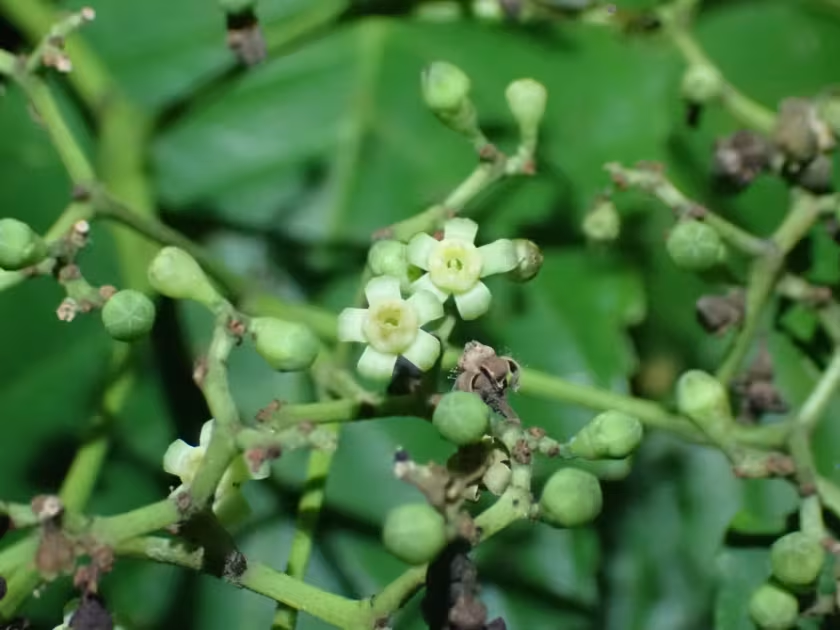
Description
Sowing dates
Propagation of Leea indica is primarily achieved through seeds or stem cuttings within controlled greenhouse environments. Sowing seeds requires a peat-based substrate and a stable temperature range between 22 and 25 degrees Celsius to ensure successful germination.
Cuttings are often preferred for maintaining the plant's desirable traits and achieving faster maturation of seedlings. The rooting process demands high ambient humidity and protection from direct sunlight to prevent premature wilting of the delicate stems.
The quality of seeds is a crucial factor for success, often requiring scarification to overcome dormancy and improve overall germination rates. Utilizing plant growth regulators during the pre-sowing stage can significantly enhance root and shoot development.
Seedlings should be transplanted after the emergence of the first two true leaves to promote vigorous root system growth. Using containers with excellent drainage is vital to ensure that the growing medium does not become waterlogged.
In its native habitat, the plant may propagate through self-seeding, but in cultivation, it requires careful management to prevent overcrowding. Springtime remains the optimal window for initiating planting activities as light levels naturally increase.
Growing requirements
Leea indica, a member of the Vitaceae family, is native to the tropical rainforests of South and Southeast Asia and thrives under specific environmental conditions. It is a shade-tolerant species, as intense direct light can easily scorch its large, compound leaves.
The soil should be rich in organic matter, well-aerated, and maintain a slightly acidic to neutral pH level. Maintaining consistent soil moisture is essential for health, although care must be taken to avoid stagnant water which can lead to root rot.
This species is highly sensitive to cold drafts and rapid temperature fluctuations, making climate-controlled greenhouses the most reliable environment for its growth. Regular fertilization with balanced minerals is necessary during the active growing season.
High humidity is non-negotiable for this plant, and in indoor settings, misting or the use of humidifiers is strongly recommended. Temperatures should be kept above 15 degrees Celsius even during the dormancy period to prevent metabolic stress.
An effective irrigation schedule allows the surface of the soil to dry slightly between waterings, preventing the onset of fungal issues. Consistent monitoring of environmental parameters ensures the plant remains healthy and resilient throughout the year.
Yield
The economic value of Leea indica is centered on its medicinal applications rather than food production. Various parts of the plant, including leaves, roots, and stems, are utilized for their pharmacological properties, containing significant levels of flavonoids and tannins.
Yield capacity is largely determined by plant density and the intensity of care provided, with individual bushes capable of reaching substantial sizes under ideal conditions. Regular pruning practices help stimulate the growth of new vegetative biomass.
The harvesting of plant material is timed to coincide with the physiological maturity of the vegetative parts. Collected material requires rapid drying in well-ventilated areas at controlled temperatures to preserve its medicinal efficacy.
Profitability in commercial cultivation depends on high demand from the pharmaceutical and cosmetic industries. Proper post-harvest sorting and cleaning are essential to ensure the final product meets standard market quality criteria.
Ongoing plantation productivity can be sustained over several years through diligent rejuvenation pruning and the consistent application of organic and mineral nutrients.
Main diseases and pests
Common pests affecting Leea indica in controlled environments include spider mites and scale insects, which flourish in low-humidity conditions. Regular inspection of the undersides of the leaves is a key management strategy for early pest detection.
Fungal pathogens such as leaf spot and root rot are frequently associated with improper irrigation practices and poor greenhouse air circulation. The use of broad-spectrum fungicides should be integrated into an overall plant health program.
Maintaining strict phytosanitary standards, including the sterilization of tools and pots, is essential to minimize the risk of disease transmission. Infected plant tissues should be removed and disposed of immediately to prevent outbreaks.
Preventative applications of systemic insecticides help protect the crop from aphid infestations, which can damage young, emerging growth. It is important to rotate products to prevent pests from developing resistance to active chemical agents.
Overall plant resistance is closely linked to its immunological status, which relies on proper lighting and nutrient balance. Stressed plants are invariably more susceptible to various biotic and abiotic pathogens.
Harvesting
Harvesting of medicinal material is conducted manually to ensure high purity and minimize contamination. Selecting periods with low ambient humidity for harvesting is crucial to prevent molding during the initial stages of post-harvest processing.
Leaves should be clipped carefully with sharp, disinfected tools, ensuring that the main stems and overall structural integrity of the plant are preserved. Roots are generally harvested only after the plant has reached a certain stage of maturity, typically not before the third year.
Post-harvest treatment involves thorough washing to remove soil particles followed by rigorous sorting based on quality and size. Immediate drying is necessary to halt enzymatic degradation and preserve the integrity of the bioactive compounds.
Dried products must be stored in airtight containers within cool, dark, and dry conditions to extend shelf life. Properly prepared material can remain stable for up to two years under these conditions.
The production manager must oversee the harvest schedule to balance extraction with the plant's ability to regenerate. Post-harvest fertilization is essential to restore plant vigor and ensure sustainable future growth cycles.