
Leea asiatica
Leea asiatica
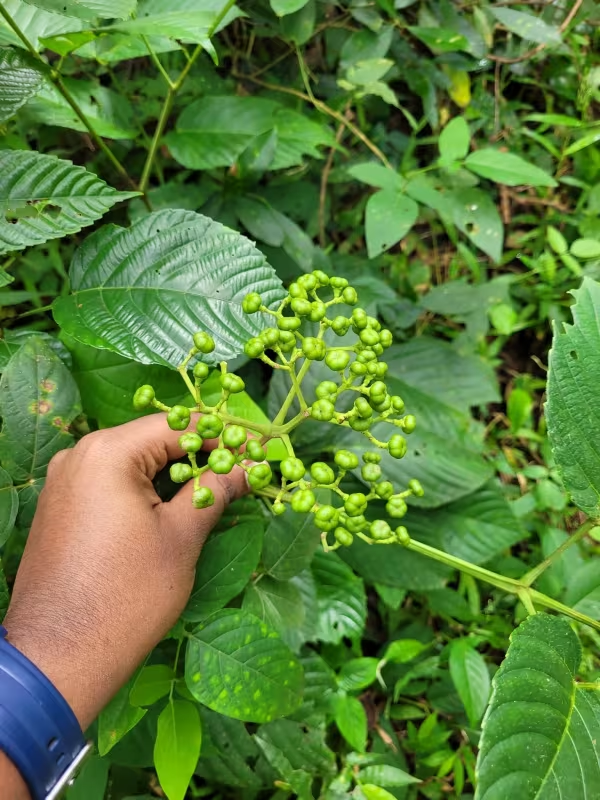
Description
Growing requirements
Leea asiatica is a perennial shrub belonging to the Vitaceae family. In its natural habitat, the plant develops as a large bush or a small tree with distinct compound leaves, making it a recognizable member of the grape family.
The native range of the culture encompasses South and Southeast Asia. It thrives in tropical and subtropical regions, typically inhabiting moist forest edges and shaded areas with sufficient levels of diffused sunlight.
Successful development of the plant requires stable temperatures ranging from 20 to 28 degrees Celsius. Leea asiatica is sensitive to abrupt temperature drops and requires protection from harsh direct sunlight, which can cause severe foliage damage.
The soil substrate must be nutrient-rich and well-aerated. The ideal growing medium is loose sandy loam or loamy soil with a neutral to slightly acidic pH, further enriched with organic matter for better structural integrity.
The plant is highly dependent on ambient air humidity. In greenhouse conditions or dry climates, maintaining consistent irrigation or misting systems is essential to ensure the vitality of the plant's vegetative mass.
Yield
The agricultural and economic utility of Leea asiatica is primarily focused on the pharmaceutical and ornamental sectors. The plant is deeply integrated into traditional medicine practices in various Asian countries.
Various parts of the plant, including roots and leaves, are harvested for phytotherapeutic purposes. Scientific research indicates that Leea asiatica possesses antioxidant, anti-inflammatory, and wound-healing properties, driving interest in its large-scale cultivation.
Its ornamental value is driven by its attractive foliage and unique inflorescences. The plant is frequently cultivated in professional nurseries as a high-end ornamental species, creating a stable market for greenhouse-grown specimens.
Productivity is strictly contingent upon adherence to proper agronomic techniques. Under intensive cultivation with balanced fertilization, the shrub produces dense foliage and significant biomass yields.
Harvesting for raw material is performed selectively when the concentration of bioactive compounds in the leaves is at its peak. Proper irrigation management allows for multiple harvests per vegetative season.
Main diseases and pests
The primary threats to Leea asiatica are fungal infections stemming from waterlogged soil conditions. Root rot is the most dangerous pathogen, capable of destroying established plants within a short timeframe.
Pests such as spider mites and scale insects are common in greenhouse environments when air humidity is low. Regular preventive maintenance with biological controls is crucial to minimize the risk of crop loss.
Foliar leaf spots caused by pathogenic fungi can significantly diminish the marketability of the product. Ensuring adequate spacing between plants to promote natural airflow is an essential management practice.
Nematodes pose a substantial threat to the root system if the soil is contaminated. Soil sterilization prior to planting or containerized production is highly recommended to mitigate this danger.
Integrated pest management strategies are recommended, focusing on early detection and rapid isolation of infected individuals to prevent the spread of pests or pathogens across the entire plantation.