
Leea equata
Leea equata
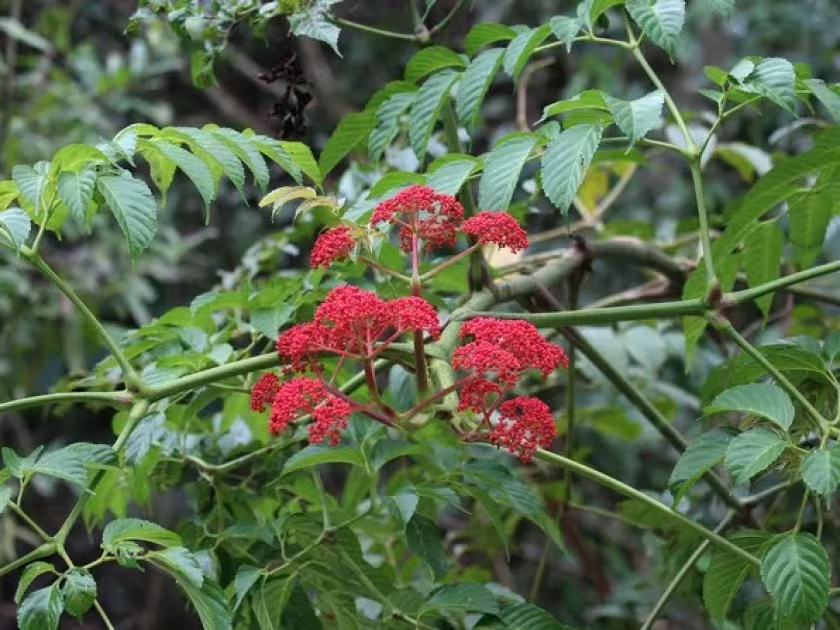
Description
Growing requirements
Leea equata is a perennial plant belonging to the Vitaceae family, widely distributed across tropical regions of Southeast Asia. It is valued for its lush foliage and robust growth, often forming dense shrub-like structures in its native forest habitats.
The plant thrives in warm and humid environments, requiring temperatures between 22 and 30 degrees Celsius. It does not tolerate frost or cold drafts, making indoor or greenhouse cultivation essential in non-tropical climates.
Ideal soil conditions involve a nutrient-rich, organic-based medium with excellent drainage capabilities. The plant benefits from slightly acidic to neutral pH levels, which support optimal nutrient uptake for its large leaves.
Regarding light requirements, Leea equata prefers filtered sunlight or semi-shaded conditions. Direct, intense sunlight should be avoided to prevent chlorophyll damage and foliage scorch, which can significantly decrease the plant's health.
Agrotechnical care involves consistent moisture management. Watering should be frequent enough to maintain a moist substrate, while humidity levels should be kept high through misting or humidification systems to replicate a forest floor environment.
Main diseases and pests
Common pests affecting Leea equata include spider mites, which thrive in low-humidity environments. Their presence is marked by fine webbing and yellowing leaves, which can be managed with neem oil or specialized acaricides.
Mealybugs and scale insects may also infest the stems and leaf axils. Physical removal using an alcohol-soaked swab is often effective for minor infestations, while systemic insecticides are required for larger outbreaks.
Root rot, driven by waterlogged soil, is the most common fungal issue. Ensuring the potting container has adequate drainage holes and using perlite or bark chips in the soil mix is vital to preventing root asphyxiation.
Fungal leaf spot diseases can emerge if the foliage remains wet for prolonged periods without sufficient airflow. Proper spacing and ventilation are key preventative strategies for maintaining foliage health.
Effective pest management for this culture relies on a proactive approach, including regular inspections and the maintenance of optimal environmental parameters to prevent stress-induced susceptibility.
Harvesting
Harvesting in Leea equata is primarily focused on the collection of leaves and bark, which are utilized in traditional medical practices within its native range. Harvesting should be done selectively to ensure the plant's longevity and continuous growth.
When harvesting leaves, it is recommended to pick mature, healthy foliage during the cooler parts of the day. This practice ensures higher concentration of active biological compounds and reduces stress on the plant.
For sustainable yield, no more than one-third of the total foliage should be removed at any single time. Proper pruning techniques are encouraged as they stimulate new lateral growth, increasing the plant's density.
The collected plant material must be dried in well-ventilated, shaded areas to preserve its chemical profile. Avoid direct exposure to high heat sources, which could lead to the degradation of essential phytochemicals.
After harvesting, the plant should receive a balanced liquid fertilizer application to support recovery and biomass regeneration. This helps the plant maintain its vigour throughout the production cycle.