
Leea coccinea
Leea coccinea
Description
Growing requirements
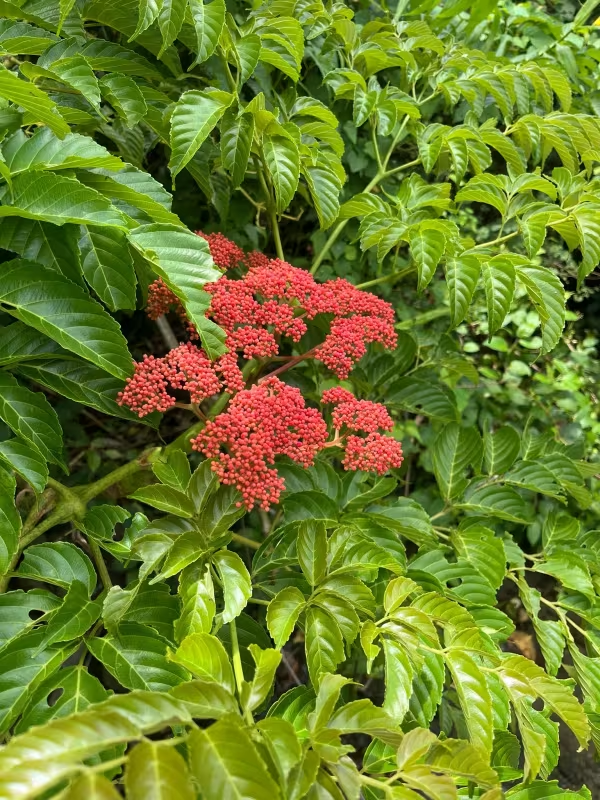
Leea coccinea is an ornamental shrub belonging to the Vitaceae family. Native to the tropical regions of Southeast Asia, this plant is valued for its lush foliage and bright red flower clusters.
The plant thrives in warm tropical conditions, requiring an ambient temperature between 20°C and 25°C. It is sensitive to cold drafts, which can cause premature leaf drop and stunted growth.
Soil requirements for Leea coccinea include a well-draining, nutrient-rich substrate. A mixture of peat-based potting soil, perlite, and organic compost is recommended to maintain the necessary moisture without causing root rot.
Regarding light, this species prefers bright, indirect light. While it is somewhat shade-tolerant, optimal growth and intense leaf coloration are achieved in areas with diffused natural light filtered through a curtain.
Agrotechnical maintenance involves consistent moisture levels, keeping the soil slightly damp but never waterlogged. Fertilization with a balanced liquid fertilizer should be applied monthly during the growing season.
Main diseases and pests
The most significant pests affecting Leea coccinea are spider mites and mealybugs, which thrive in low-humidity environments often found indoors during winter.
Scale insects can also infest stems and foliage, drawing sap and weakening the plant's structural integrity over time if left untreated.
Root rot, primarily caused by waterlogged soil and poor drainage, remains the most frequent physiological threat, leading to yellowing leaves and plant collapse.
Effective management includes regular monitoring of the leaf undersides and the use of insecticidal soap or neem oil to control initial pest outbreaks.
Maintaining high ambient humidity through pebble trays or humidifiers is the best preventative strategy against common sap-sucking pests and foliage stress.