
Leea compactiflora
Leea compactiflora
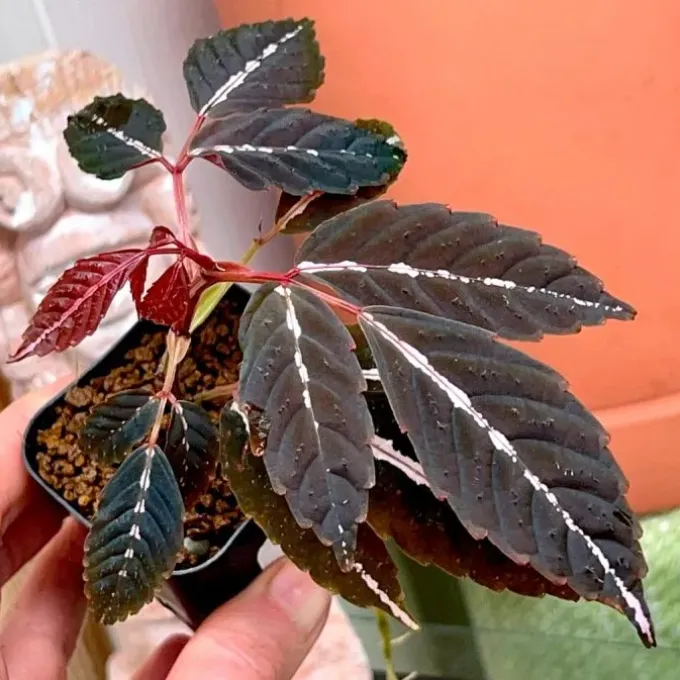
Description
Growing requirements
Leea compactiflora is a perennial shrub belonging to the Vitaceae family, native to the tropical rainforests of Southeast Asia. This species is recognized for its dense, compact growth habit and lush foliage, making it a valuable subject for specialized ornamental horticulture.
The plant thrives in warm, humid tropical environments, requiring temperatures strictly between +20°C and +28°C for optimal metabolic activity. It is highly sensitive to frost and sudden cooling, which necessitates controlled environment cultivation in temperate climate zones.
Agrotechnical requirements include the use of well-structured, nutrient-rich, and highly porous substrates. Proper drainage is essential to prevent waterlogging, as the root system is susceptible to hypoxia if kept in compacted, water-saturated soils for extended periods.
Consistent ambient humidity levels, preferably maintained above 70%, are crucial for the health of Leea compactiflora. In greenhouse or interior landscape conditions, automated misting systems or controlled irrigation is recommended to simulate the plant's natural understory habitat.
Cultivation practices focus on balanced vegetative development through controlled fertilization during the active growing season. The plant performs best under partial shade or filtered light conditions, which preserve the natural deep green pigmentation of its foliage.
Main diseases and pests
Spider mites are the most common pests threatening Leea compactiflora, particularly in environments with suboptimal humidity. Regular monitoring and maintaining high atmospheric moisture are the primary cultural controls against these infestations.
Root rot, primarily caused by Phytophthora or Pythium species, remains the most significant pathological threat. This is almost exclusively associated with improper irrigation management and poor soil aeration, leading to rapid plant decline.
Foliar fungal infections, such as leaf spot, can occur if water remains on the leaf surface for prolonged periods without adequate air circulation. Improving airflow within the greenhouse is a fundamental preventative measure against these infections.
Scale insects can establish colonies along the stems and main leaf veins, extracting sap and weakening the plant. Mechanical removal combined with systemic insecticidal treatments is required for effective control in large-scale operations.
Nutrient deficiencies, particularly nitrogen and magnesium, manifest as interveinal chlorosis, which negatively impacts plant quality. Periodic laboratory analysis of the growing medium is recommended to optimize nutrient delivery programs and ensure robust plant health.