
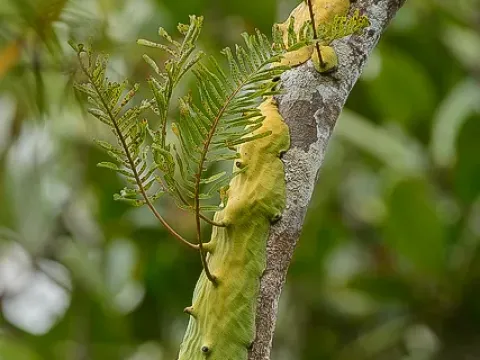
Lecanopteris
Lecanopteris
Lecanopteris is a unique genus of ferns belonging to the Polypodiaceae family. These plants are primarily epiphytic, naturally occurring in the tropical rainforests of Southeast Asia, where they often colonize tree branches as their primary habitat.
What the section contains


Lecanopteris
The hallmark of the Lecanopteris genus is its specialized, hollow rhizomes. In nature, these rhizomes serve as homes for ants, creating a fascinating symbiotic relationship where the plant gains nutrients while providing shelter to the insect colonies.
To cultivate these ferns successfully, growers must maintain a high-humidity environment and stable temperatures, ideally between 20 and 28 degrees Celsius. Preventing water stagnation is crucial for the overall health of the root system.
The substrate used for planting must be exceptionally well-draining, such as pine bark, charcoal, and sphagnum moss mixes. As an epiphyte, the plant requires consistent airflow around its rhizomes to prevent fungal pathogens from taking hold.
Lecanopteris thrives in filtered, indirect light. Direct sunlight can easily scorch the delicate fronds and damage the structure of the rhizomes. Cultivation on mounting boards or in open hanging baskets is generally preferred over traditional pot gardening.
The primary threats to Lecanopteris health are linked to improper watering practices. Over-watering and high humidity without sufficient air circulation frequently lead to rhizome rot, which can destroy the entire specimen in a short time.
Insect pests, including scale insects and mealybugs, represent significant challenges. These pests tend to hide within the deep folds and hollow chambers of the rhizomes, making them difficult to detect and treat without manual intervention.
Spider mites are a common threat, especially in environments where humidity levels are inconsistent. These microscopic pests feed on the foliage, eventually causing the fronds to yellow, wilt, and drop prematurely if left unchecked.
Preventative care is essential, consisting of regular inspections and maintaining clean growing conditions. Removing decaying plant matter from the root area helps to prevent the spread of opportunistic fungal diseases.
When dealing with infestations, mild horticultural soaps or systemic insecticides should be applied with caution. Because of the plant's sensitivity, always test treatments on a small portion of the fronds before applying to the entire specimen.