
Lecanopteris sinuosa
Lecanopteris sinuosa
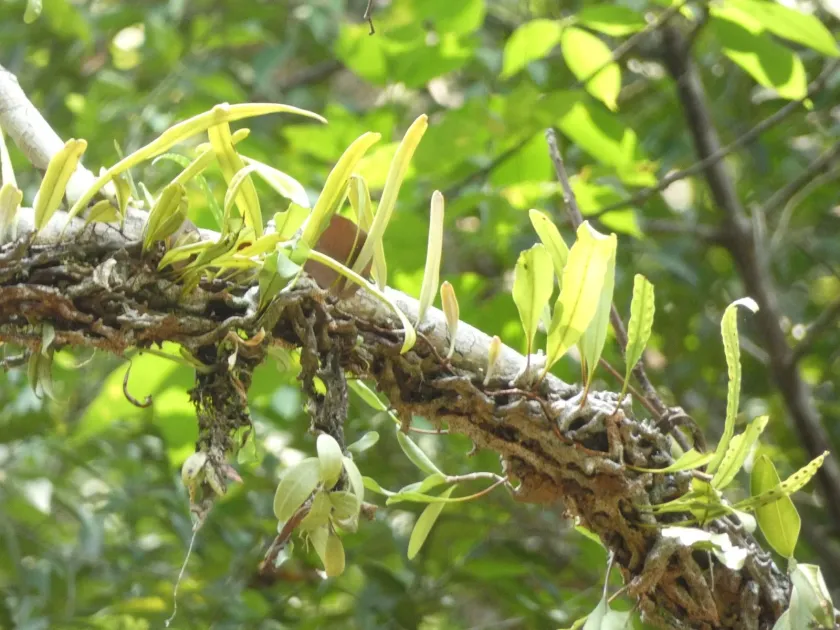
Description
Growing requirements
Lecanopteris sinuosa is a fascinating epiphytic fern belonging to the Polypodiaceae family. It is native to the tropical forests of Southeast Asia, where it thrives high in the canopy, often attached to tree branches.
The plant is widely known as an ant fern due to its specialized, hollowed rhizomes. In its natural habitat, these structures provide a nesting site for ants, which in return contribute to the plant's nutrient uptake through their organic waste.
Successful indoor cultivation requires a stable, high-humidity environment. This fern is best suited for vivarium or greenhouse conditions where humidity levels can be maintained consistently above 70%.
The growing medium must be highly porous and well-draining. A classic epiphytic mix consisting of orchid bark, perlite, charcoal, and long-fiber sphagnum moss is ideal to prevent root suffocation.
Lighting should be bright but strictly indirect. Excessive exposure to direct sunlight will scorch the delicate foliage and dry out the rhizomes too rapidly, which may lead to irreversible damage to the plant.
Main diseases and pests
Pests such as mealybugs and scale insects are common threats to this species. They often find shelter in the crevices of the hollow rhizomes, making them difficult to detect and eradicate without thorough inspection.
Root and rhizome rot are the most frequent diseases, typically caused by waterlogged substrate or lack of airflow. Ensuring adequate ventilation is as important as the correct irrigation frequency for maintaining health.