
Lecanopteris pumila
Lecanopteris pumila
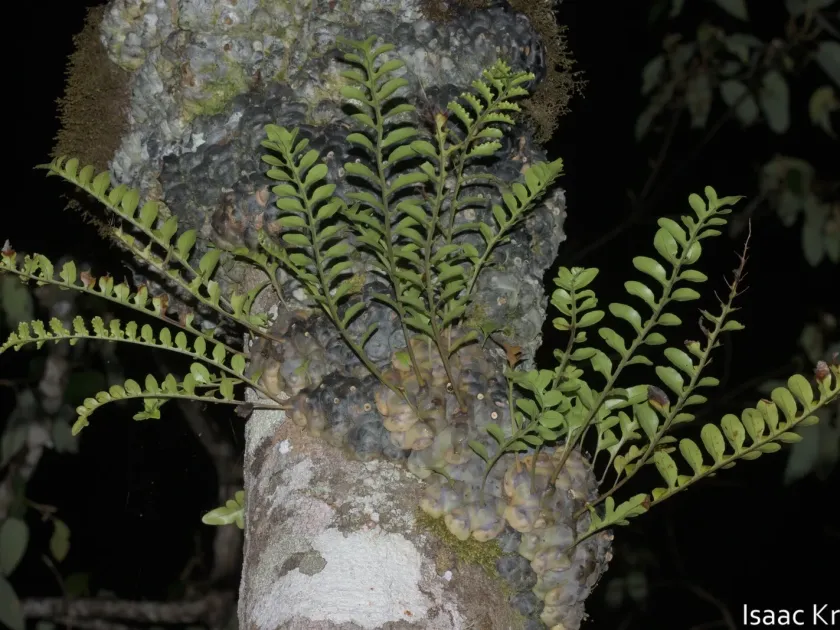
Description
Growing requirements
Lecanopteris pumila is a distinct species of fern belonging to the Polypodiaceae family. Native to the tropical rainforests of Southeast Asia, this plant is renowned for its fascinating epiphytic nature and its ability to thrive in canopy environments.
The plant is categorized as a myrmecophyte, meaning it maintains a symbiotic relationship with ants. It develops specialized, swollen rhizomes with internal cavities that provide nesting space for ants, while the plant benefits from the nutrients provided by the colony's waste products.
In cultivation, this species requires a stable environment with high atmospheric humidity, ideally maintained above 70%. It is highly sensitive to desiccation and fluctuations in environmental conditions, necessitating a controlled greenhouse or terrarium setting.
The substrate must mimic the tree bark environment where these plants grow in nature. An ideal mix includes orchid bark, long-fiber sphagnum moss, and charcoal to ensure high drainage and oxygen access to the rhizome, which is prone to rot if kept in dense, waterlogged soil.
Light requirements are best met with bright, filtered, or indirect light. It should not be subjected to intense, direct tropical sunlight, as this will lead to chlorophyll degradation and scorching of the delicate, thin fronds characteristic of this species.
Main diseases and pests
The primary threats to Lecanopteris pumila include fungal and bacterial infections caused by poor ventilation and overwatering. If the rhizome remains wet without sufficient airflow, tissue degradation occurs rapidly, often leading to the death of the entire plant.
Insect pests such as spider mites are common if the humidity levels drop too low. Additionally, mealybugs may hide within the crevices of the rhizome, making them difficult to detect and control; therefore, regular preventative inspections are strictly necessary for healthy growth.