
Lecanopteris crustacea
Lecanopteris crustacea
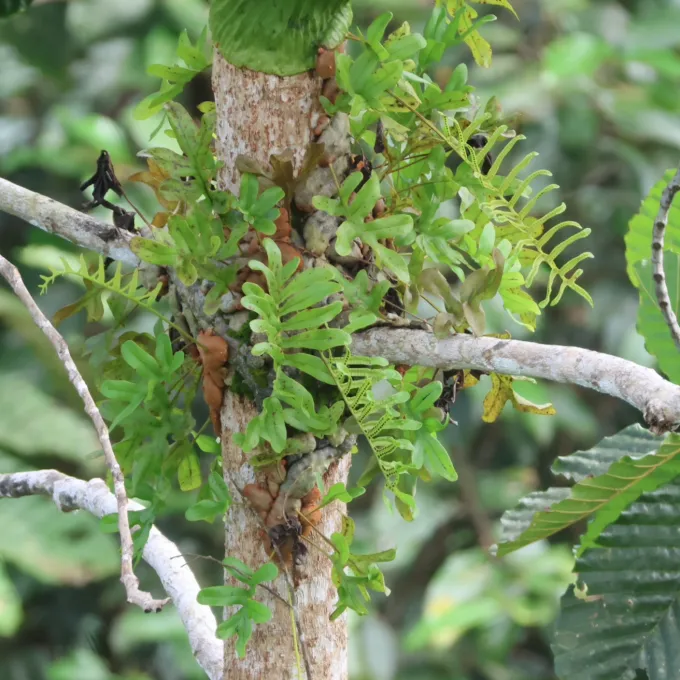
Description
Growing requirements
Lecanopteris crustacea is an exotic epiphytic fern belonging to the Polypodiaceae family, native to the tropical forests of Southeast Asia. This species is famous for its symbiotic relationship with ants, which inhabit its specialized, hollow, and bloated rhizomes.
To cultivate this plant successfully, high atmospheric humidity is required, typically ranging between 70% and 85%. Maintaining a consistent tropical temperature, ideally between +22°C and +26°C, is essential for the fern to maintain active growth throughout the year.
As an epiphyte, this plant requires a specific growing medium that mimics its natural habitat. Avoid dense soils; instead, use mounts made of tree fern fiber, cork bark, or a loose mixture of sphagnum moss and charcoal to ensure maximum aeration for the roots.
Bright, filtered light is the optimal condition for this species. Direct sunlight should be avoided at all costs, as it will scorch the fronds and dry out the sensitive rhizomes. Artificial LED lighting can be used to stabilize the growth cycle in indoor environments.
Watering should be balanced to keep the substrate slightly moist but not waterlogged. The hollow structures of the rhizome can retain moisture, and overwatering often leads to anaerobic conditions that trigger rot in the root system.
Main diseases and pests
Fungal diseases caused by stagnant air and excess moisture are the primary threat to the health of the plant. Ensuring active airflow around the rhizomes is the most effective preventative measure against such pathogens.
Scale insects and mealybugs are the most common pests found on this fern. Due to the complex morphology of the rhizomes, these pests can hide in deep crevices, making manual removal and careful inspection a necessary routine.
Spider mites are a major concern in environments with low humidity. They can quickly damage the fronds, leading to loss of vigor and potential plant death if left untreated by increased humidity or specific acaricides.
Root rot, driven by stagnant water, requires immediate intervention. If detected, the affected parts of the rhizome should be excised, and the plant must be remounted on fresh, sterile material to stop the spread of infection.
Regular maintenance, including removing debris from around the plant and ensuring the water quality is free from high salt concentrations, helps to maintain the plant's natural resistance to environmental stress and pests.