
English lavender
Lavandula angustifolia Mill. ssp. angustifolia
Description
Sowing dates
The sowing of English lavender on a commercial scale is typically performed in late autumn or early spring. If planting in spring, seeds require stratification at temperatures between 0 and 5 degrees Celsius for approximately 40 days to break dormancy and ensure uniform germination.
For nursery production, seeds are sown in seedling trays during late winter. Providing a light, well-draining substrate with neutral pH is crucial for the healthy development of the root system, which is essential for the long-term viability of the lavender plantation.
Transplanting seedlings into the field is carried out once the risk of frost has passed. Planting patterns are designed to facilitate mechanized maintenance, with row spacings ranging from 1.4 to 1.8 meters, ensuring ample space for plant growth and equipment access.
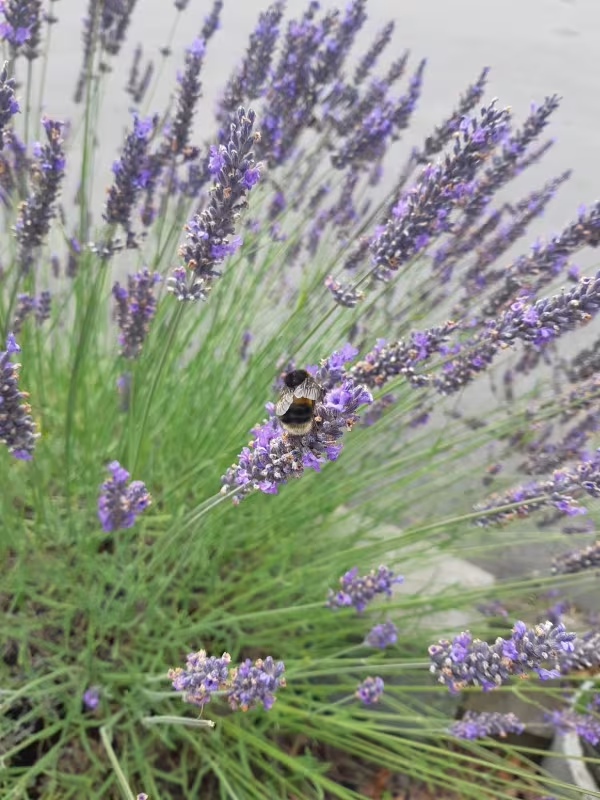
Lavandula angustifolia belongs to the Lamiaceae family. It is a perennial subshrub characterized by a deep taproot system, which allows the plant to access moisture from deeper soil layers, contributing to its notable drought tolerance in established stands.
Botanically, it features linear, silver-green foliage and spikes of aromatic flowers. Modern cultivars offer a range of bloom colors and oil profiles, selected for specific industrial uses in the perfume and pharmaceutical sectors.
Growing requirements
Lavender is a heliophilic plant, meaning it requires full sun to thrive and produce high-quality essential oils. Adequate light exposure is directly linked to the concentration of secondary metabolites, which determine the commercial value of the crop.
Soil requirements are strict: lavender demands excellent drainage. Soils prone to waterlogging are unsuitable and will lead to root rot. Sandy, rocky, or well-drained loam soils with a slightly alkaline to neutral pH are considered ideal for this species.
Climatically, the plant prefers a Mediterranean-type climate with mild, wet winters and dry, sunny summers. Despite its origin, English lavender is notably cold-hardy and can withstand temperatures down to -25 degrees Celsius if properly established.
Agronomic management includes regular cultivation between rows to suppress weeds and improve soil aeration. Formative pruning should be conducted every spring to encourage bushiness, prevent the base of the plant from becoming woody and bare, and extend the lifespan of the stand.
Host use of the crop is extensive, spanning essential oil extraction for fragrances, pharmaceutical use, and as a significant melliferous plant. Sustainable farming practices focus on preserving soil health and maintaining biodiversity within the plantation ecosystem.
Yield
Yields of English lavender are influenced by the age of the plantation, cultivar selection, and soil fertility management. A commercial stand typically reaches peak productivity between the third and fifth year, remaining productive for over a decade.
Average yields of fresh flowering stems range from 4 to 8 metric tons per hectare, depending on local conditions. The essential oil content, which is the primary economic target, generally accounts for 1% to 2% of the total fresh weight of the harvested flowers.
The concentration of essential oil fluctuates daily, peaking during full bloom on sunny, warm days. Strategic timing of the harvest is vital to maximize the recovery of high-quality oils, as timing significantly affects the chemical composition of the final product.
Fertilization regimes, particularly nitrogen and phosphorus levels, must be managed carefully. Excessive nitrogen can increase vegetative growth at the expense of oil quality, whereas balanced nutrition ensures robust blooming and long-term crop resilience.
Regular monitoring of yield metrics helps farmers make informed decisions about plantation renewal. Replacing aging stands with fresh, virus-free nursery stock is necessary to maintain the economic efficiency of the operation over the long term.
Main diseases and pests
Gray mold (Botrytis cinerea) is a prevalent threat, particularly in humid conditions. It targets flower spikes and foliage, causing tissue decay. Proper spacing and airflow management within the plantation are the primary preventive measures against fungal outbreaks.
Root diseases, including Phytophthora, are often fatal and result from poor soil drainage. Site selection and avoiding soil compaction are critical to preventing these infections, which can easily wipe out sections of a plantation.
Pests such as the lavender beetle can cause significant foliage damage, weakening the plants. Integrated Pest Management (IPM) strategies, including biological control agents and careful monitoring, are preferred to minimize chemical input and maintain product quality.
Nematodes are another potential pest, particularly in lighter, sandy soils. Crop rotation and using certified, disease-free planting material remain the most effective methods to prevent the introduction of these soil-borne pathogens into new fields.
Early diagnosis is key to successful management. Any symptomatic plant parts should be removed promptly and destroyed away from the field to limit the spread of pathogens, ensuring the overall health of the plantation remains intact.
Harvesting
The harvest phase occurs when 50% to 70% of the flowers on the spikes have opened. This timing captures the optimal balance of oil quantity and olfactory quality, which is essential for meeting the high standards of the fragrance industry.
Mechanical harvesting is commonly utilized in large-scale operations. Modern harvesters are precision-calibrated to cut the flower stalks at a specific height, ensuring that leaves are minimized and that the oil extracted is of high purity.
Post-harvest logistics require that the floral material be processed or dried as quickly as possible. Prolonged exposure to heat after cutting leads to the rapid evaporation of volatile compounds, which significantly degrades the final product quality.
Steam distillation is the industry standard for oil extraction. This delicate process requires precise temperature and pressure control to isolate the complex aroma profile of the lavender essential oil without damaging the sensitive molecules.
For dried floral markets, flowers are dried in shaded, well-ventilated areas at temperatures not exceeding 40 degrees Celsius. This preserves the color and scent, making the product highly desirable for tea blends, culinary uses, and artisanal sachets.