
Broad-leaved lavender
Lavandula latifolia Medik.
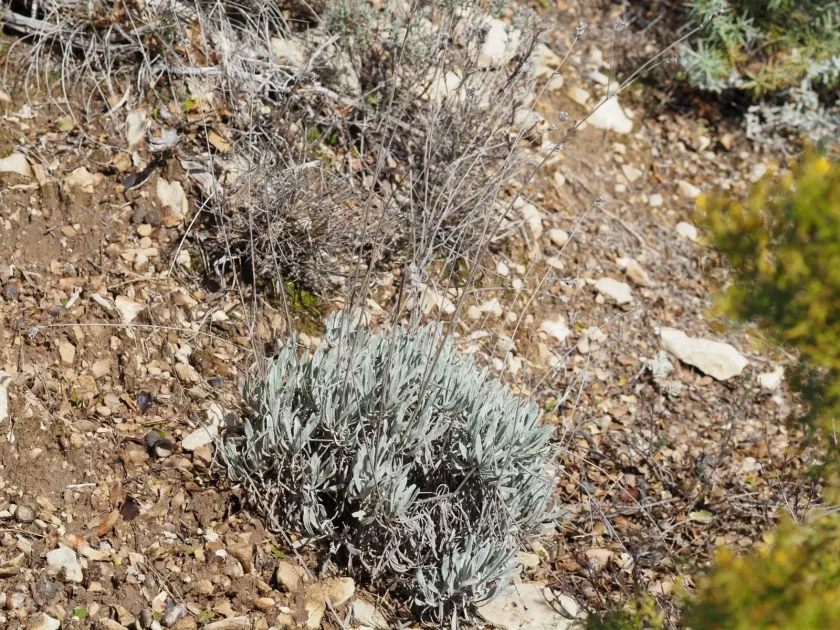
Description
Sowing dates
Sowing Broad-leaved lavender seeds is best performed in the spring when soil temperatures stabilize. Seeds require a period of cold stratification for 30 to 40 days to break dormancy and ensure high germination rates.
Transplanting seedlings is the preferred method for agricultural production. Seeds are sown in greenhouse trays in late winter, providing enough time to develop a robust root system before field planting.
When direct seeding, shallow placement is essential as the seeds require exposure to light to germinate. Cover them only lightly with fine soil and maintain constant moisture until the sprouts appear.
Initial weed control is vital during the first stages of growth. Young lavender plants are easily outcompeted by weeds, which can significantly stunt their development if not managed properly.
Commercial plantations are typically spaced with rows 70 to 100 cm apart to allow for machinery movement and sufficient airflow, which is critical for reducing humidity-related diseases.
Growing requirements
Broad-leaved lavender (Lavandula latifolia) belongs to the Lamiaceae family. It is a Mediterranean native, meaning it thrives in regions with hot, dry summers and requires full solar exposure throughout the day.
The crop demands well-draining, stony, or sandy soil types. It is highly intolerant of waterlogged conditions, which lead to root rot; therefore, selecting a site with natural slope is often advantageous.
This species prefers a neutral to slightly alkaline soil pH. In acidic environments, it is recommended to add agricultural lime to reach the desired range of 6.5 to 7.5 for optimal nutrient uptake.
While drought-tolerant once established, irrigation is necessary during the early growth phases and during prolonged dry spells to maximize biomass production and oil accumulation in the flowers.
Protection from severe frost is required, as this species is less winter-hardy than its cousin, Lavandula angustifolia. Proper site selection in microclimates that avoid cold air pooling is essential for long-term viability.
Main diseases and pests
Grey mold (Botrytis cinerea) poses a major threat, particularly in damp climates or poorly ventilated fields. Regular pruning and maintenance of proper spacing help to mitigate this risk.
Spittlebugs are common pests that cause cosmetic damage and stress the plants. Their presence is indicated by foamy masses on the stems, which protect the larvae from environmental conditions.
Root rot pathogens remain the most lethal threat to lavender fields. These are primarily caused by over-irrigation or planting in heavy, clay-based soils that do not allow for rapid water drainage.
Leaf-eating insects, including various beetles and caterpillars, can occasionally reach outbreak levels. Farmers should employ integrated pest management (IPM) strategies to maintain balance in the plantation.
Sanitation practices, such as the prompt removal of dead plant material and debris after pruning, significantly lower the risk of fungal infections and pest over-wintering within the plot.
Harvesting
Harvesting should be performed when the lavender is in full bloom, with at least 50-70% of the flowers on the spike open. Harvesting too early or too late results in lower essential oil yields.
The cutting process should take place on dry, sunny days after the morning dew has completely evaporated. Moisture on the harvested material can degrade quality during transport and processing.
Cut the stems just above the woody part of the plant. This promotes healthy regrowth for the following season and prevents the plant from becoming excessively woody or sparse over time.
Processing must follow harvesting immediately. Fresh material is highly perishable, and oil extraction should be scheduled as soon as possible to ensure the highest chemical profile of the end product.
Drying is an alternative use for harvested lavender, which should be done in a dark, airy environment or industrial dryer at low temperatures to prevent the loss of volatile aromatic compounds.