
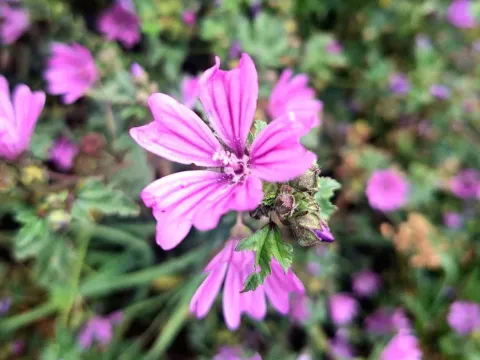
Lavatera
Lavatera L.
Lavatera is a sun-loving crop that should be sown outdoors once the risk of spring frost has completely passed. The optimal time for planting is late April or early May when the soil has sufficiently warmed.
What the section contains


Lavatera
For indoor propagation, seeds are sown in individual containers 4–6 weeks before the intended transplant date. This method promotes faster growth and earlier flowering once moved to the field.
The planting depth for seeds is typically between 1 and 1.5 centimeters. It is crucial to maintain proper spacing between individual plants, usually ranging from 30 to 50 centimeters depending on the specific variety.
Before sowing, the soil must be thoroughly prepared by removing weeds and loosening the surface to facilitate aeration. Seedlings typically emerge within 10–14 days under stable moisture conditions.
Timely thinning of seedlings is necessary to prevent competition for essential nutrients and sunlight. This practice ensures that individual plants develop strong root systems and robust stems.
Lavatera belongs to the Malvaceae family and encompasses a range of annual and perennial herbs and subshrubs. The crop is known for its hardiness and adaptability to various temperate climate conditions.
The plant thrives in open areas that receive abundant sunlight. In shaded locations, Lavatera stems tend to grow spindly and weak, and the overall flowering intensity significantly declines.
Lavatera prefers light, fertile, and well-drained soils with a neutral pH level. The plant does not tolerate waterlogging, so areas with high groundwater levels are unsuitable for its cultivation.
Thanks to a strong taproot system, the crop demonstrates good drought resistance. However, regular moderate watering during hot periods is essential to maintain optimal growth and aesthetics.
Fertilizer application should be managed carefully, as an excess of nitrogen promotes foliage growth at the expense of floral development. Balanced, slow-release fertilizers are ideal for healthy growth.
The хозяйственное (economic) use of Lavatera is diverse, ranging from its application in landscape design to its potential as an industrial fiber crop.
The stems of many Lavatera species contain significant amounts of bast fiber, which possesses physical properties similar to other Malvaceae plants like kenaf or velvetleaf.
The biological productivity of Lavatera biomass is substantial. With proper agronomic management, the crop can reach heights of 1.5–2 meters within a single growing season.
As a melliferous plant, Lavatera is highly valued by beekeepers due to its long flowering period, which provides a steady supply of nectar for pollinators throughout the summer.
Final biomass yields depend largely on planting density and the quality of the soil environment, allowing for significant production potential when managed under professional agronomic standards.
The most significant phytopathological risk for Lavatera is rust. This fungal disease appears as discolored spots on leaves, which eventually lead to premature wilting and defoliation if left untreated.
To prevent the spread of fungal infections, it is critical to avoid overcrowding in plantings. Proper spacing ensures adequate air circulation, which helps keep the foliage dry.
Among insect pests, aphids pose the greatest threat, as they actively feed on young shoots and buds. These pests can cause significant damage and act as vectors for viral plant diseases.
When pests are detected, the use of systemic insecticides or biological control agents is recommended. Regular weed control is also vital, as many weeds act as secondary hosts for common pests.
Root rot may occur in conditions of excessive soil moisture or poor drainage. The best preventative strategy is to maintain a balanced watering schedule and ensure adequate soil drainage.