
Lavatera clementii
Lavatera x clementii Cheek
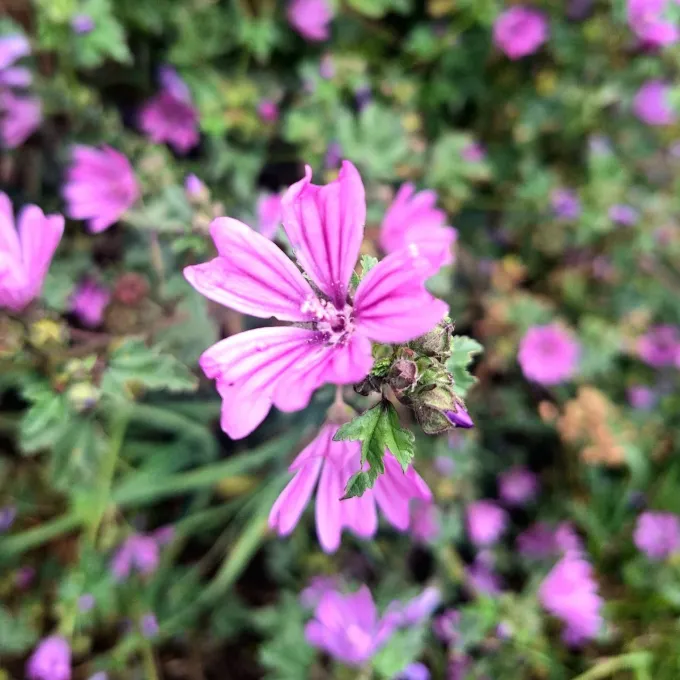
Description
Sowing dates
Sowing seeds of Lavatera clementii directly into open ground is carried out in the spring, once the threat of frost has passed, usually in April or early May. The optimal soil temperature for germination is between 15 and 18 degrees Celsius.
To encourage early flowering, the crop is grown from seedlings. Sowing in individual containers is performed in March, providing seedlings with sufficient diffused light and moderate watering.
Before sowing, it is recommended to soak the seeds in warm water for a few hours to accelerate the swelling of the seed coat. The sowing depth should not exceed one centimeter.
When transplanting seedlings to their permanent location, a distance of 40–50 centimeters between plants should be maintained. This is necessary to ensure proper air circulation and prevent overcrowding.
The first seedlings under favorable conditions appear 10–14 days after sowing. Subsequent thinning allows for the selection of the strongest specimens to form a decorative cluster.
Growing requirements
Lavatera clementii is a perennial ornamental hybrid of the Malvaceae family, derived from crossing Lavatera olbia and Lavatera thuringiaca. The plant is a vigorous subshrub that reaches a height of up to 1.5–2 meters.
This crop is light-loving and heat-loving, so well-lit areas protected from strong winds should be chosen for planting. In partial shade, the plant becomes leggy and produces fewer flower buds.
The soil for cultivation should be light, fertile, and well-drained. Lavatera reacts extremely negatively to stagnant moisture, which leads to rapid rotting of the root system.
Caring for the crop involves regular weeding and loosening of the root zone to improve soil aeration. Watering should be moderate but regular during dry summer periods to maintain leaf turgor.
The plant responds well to the application of complex mineral fertilizers. Fertilizing is carried out twice a season: at the beginning of active growth to build green mass and during the budding phase to ensure abundant flowering.
Main diseases and pests
The main biological threat to this species is rust, which manifests as orange or brown spots on the underside of the leaves. Affected leaves should be removed immediately.
To combat fungal diseases, preventive treatments with systemic fungicides are used. It is important to avoid overhead watering to prevent creating a humid environment that promotes spore development.
Among pests, aphids are most commonly found on lavatera plantings, as they suck sap from young shoots and flower buds. In case of massive infestation, broad-spectrum insecticides are used.
Spider mites can affect plants during hot and dry summers. If thin webbing is detected on the underside of leaves, acaricide treatment should be performed in the evening hours.
Adherence to crop rotation and agricultural practices, such as preventing overcrowding of plantings, significantly reduces the risk of epiphytotics and the appearance of harmful insects in the garden.