
Thuringian lavatera
Lavatera thuringiaca L.
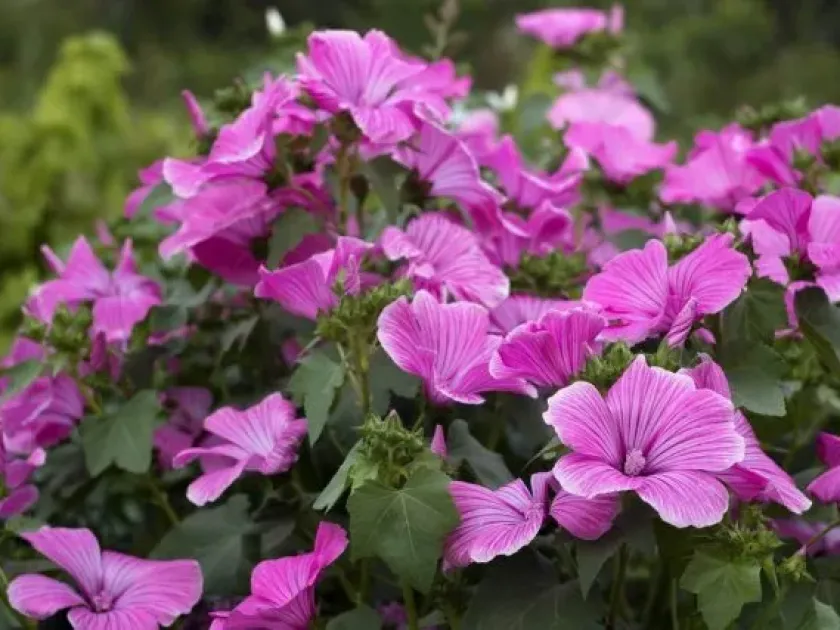
Description
Sowing dates
Thuringian lavatera (Lavatera thuringiaca L.) is a long-lived perennial plant belonging to the Malvaceae family. It is widely recognized for its vigor and versatility in both ornamental and agricultural contexts.
Sowing is typically performed in early spring once soil temperatures reach 8-10 degrees Celsius. Late autumn sowing is also a viable strategy to ensure rapid germination as soon as the frost clears in spring.
Seeds should be planted in rows with a spacing of 45-60 centimeters to accommodate the significant growth of the plant. A seeding depth of 1-2 centimeters is recommended for optimal moisture retention and germination rates.
The plant establishes a significant taproot and a leaf rosette in its first year, focusing its energy on root development rather than stem growth.
Being a perennial, the crop can occupy the same area for up to a decade, which makes the initial field preparation and weed management crucial for long-term productivity.
Growing requirements
This species is highly photophilous and requires full sun exposure to flourish. It performs poorly in shaded areas, which can lead to elongated, weak stems and reduced flower production.
While it adapts to various soil types, the plant prefers fertile, well-drained loamy soils. It is sensitive to waterlogging and acidic soil conditions, which may inhibit growth.
Thuringian lavatera exhibits strong drought tolerance and cold hardiness once established, making it a reliable choice for various climatic zones in temperate regions.
Cultural care involves inter-row cultivation during the early growth stages to suppress weed competition. As the plants grow larger, their dense canopy naturally shades the soil and inhibits weed establishment.
Deep tillage prior to planting is recommended to facilitate the penetration of the taproot, which is essential for the plant's long-term sustainability and nutrient uptake.
Yield
Thuringian lavatera is highly valued by beekeepers due to its extended flowering period from July to September, providing a consistent source of high-quality nectar.
As a forage crop, it provides substantial biomass that is rich in proteins and nutrients. It can be harvested multiple times throughout the season for green fodder or ensilage.
The plant's ability to produce high yields of organic matter makes it an excellent choice for soil remediation and improving the structure of impoverished soil profiles.
Seed harvesting requires precision, as the seed pods shatter easily. Harvesting should occur as soon as the pods turn brown but before they release their contents.
The crop remains productive for several years, offering a low-maintenance solution for farmers seeking to maintain continuous forage or bee-pasture cover.
Main diseases and pests
The plant is generally resistant to most common diseases. However, in environments with poor air circulation or excessive moisture, it may be susceptible to powdery mildew or rust.
Insect pests such as weevils might target the foliage, but they rarely reach levels that threaten the overall survival of a mature, healthy stand.
To minimize pest and disease incidence, it is recommended to maintain proper plant spacing, ensuring the canopy remains dry and well-ventilated during the summer months.
Effective weed control during the seedling phase is the most important factor in ensuring the crop's establishment, as young plants are easily outcompeted by aggressive weeds.
By following standard integrated pest management practices and avoiding overcrowding, farmers can successfully maintain a healthy and productive crop of Thuringian lavatera.