
Klasea radiata
Klasea radiata
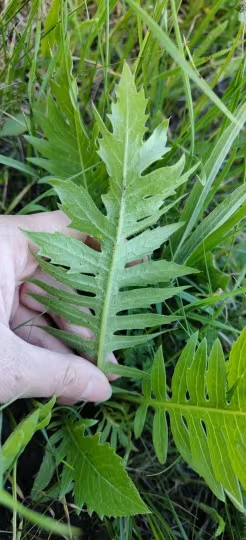
Description
Growing requirements
Klasea radiata is a perennial herbaceous plant belonging to the Asteraceae family. Known for its adaptability, this species is widespread across the steppes and forest-steppe zones of Eurasia, demonstrating a high degree of ecological flexibility in various habitats.
The plant thrives in open, sun-exposed areas. In its natural habitat, it is commonly found on dry meadows, rocky slopes, and forest edges. Its deep, well-developed root system provides excellent drought resistance, allowing it to survive in environments where water availability is periodic or limited.
Regarding soil requirements, Klasea radiata prefers well-drained, moderately fertile soils. It is well-suited to neutral or slightly alkaline conditions and performs adequately on sandy loams. Good soil drainage is essential, as waterlogged conditions can inhibit growth and lead to root decay.
The climate requirements of this species are defined by its native range, which spans regions with significant seasonal temperature variations. The plant is highly winter-hardy and capable of enduring frost without damage, making it a reliable perennial in temperate climates.
The economic utility of Klasea radiata focuses on its value as a medicinal plant and a significant honey source. It contains unique chemical compounds, such as ecdysteroids, which are of interest to the pharmaceutical industry. Furthermore, it serves as a valuable component in ecological restoration due to its ability to stabilize soil surfaces.
Main diseases and pests
The main pests affecting the plant include various species of aphids and weevils that feed on the stems and flower heads. Under conditions of excessive humidity, fungal infections like powdery mildew or rust may occur, particularly if the plants are spaced too closely together.