
Klasea legionensis
Klasea legionensis
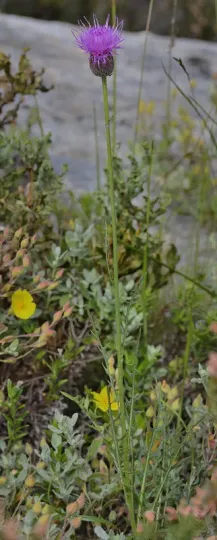
Description
Sowing dates
Klasea legionensis is a perennial herbaceous plant, requiring spring sowing when the soil temperature consistently reaches 10–12 degrees Celsius.
Early spring seeding is critical to ensure that seedlings develop a robust root system before the onset of intense summer heat and potential moisture stress.
Seeds should be planted at a shallow depth of 1–2 centimeters, which facilitates better germination and contact with the moist soil environment.
Vegetative propagation via root division is another viable option, typically performed in early spring or autumn to ensure successful establishment.
Planting density must be carefully managed to prevent inter-plant competition and to promote adequate air circulation within the developing canopy.
Growing requirements
As a native of the Iberian Peninsula, this plant is well-adapted to Mediterranean and temperate climates with distinct temperature fluctuations.
The crop thrives in well-drained, calcareous soils, reflecting its natural preference for the specific geological conditions of its native habitat.
It exhibits remarkable drought resistance, making it an excellent candidate for cultivation on marginal, rocky soils where other crops might struggle to yield.
Abundant sunlight is essential for optimal growth; excessive shading significantly reduces biomass production and negatively impacts the plant's overall health.
During the growing season, consistent but moderate watering is necessary, while protecting the root zone from waterlogging is crucial for plant longevity.
Yield
The biomass yield of Klasea legionensis is heavily dependent on the quality of field maintenance, soil nutrient levels, and consistent sunlight exposure.
With an intensive agricultural approach, this crop can provide consistent annual yields throughout its productive lifespan of several years.
The economic value lies primarily in the specific biochemical profile of its foliage, which is highly sought after by the pharmaceutical industry.
Proper timing of the harvest is vital, as the concentration of active compounds peaks specifically during the plant's full-flowering phase.
A well-managed plantation can remain productive for up to 8 years, provided that standard fertilizing and weed control practices are strictly followed.
Main diseases and pests
Fungal diseases are the primary threat to the crop, particularly under conditions of high humidity or poor field drainage that prevents proper air flow.
Root rot remains a concern, especially if the planting site lacks sufficient permeability, leading to standing water that compromises the root structure.
Various foliar-feeding insects can cause significant damage to the plant's leaves, requiring regular monitoring to manage pest population outbreaks.
Implementing a comprehensive integrated pest management (IPM) system helps minimize damage while reducing the need for aggressive chemical interventions.
Using certified, disease-free starting material is an essential preventative measure against the introduction of pathogens into a new field plantation.
Harvesting
Mechanical harvesting is the preferred method for large-scale operations, utilizing mowers set to a specific cutting height to ensure rapid plant regrowth.
Precision in scheduling the harvest is critical; delaying the cut results in lignified stems and a significant decline in the quality of the harvested material.
Freshly cut biomass must be processed immediately, with rapid drying to preserve the chemical integrity and color of the harvested raw product.
Drying should take place in well-ventilated areas, ensuring temperature control to prevent heat-induced degradation of the crop's volatile compounds.
Once dried, the product should be stored in moisture-controlled environments to protect the material from environmental degradation and mold development.