
Klasea cerinthifolia
Klasea cerinthifolia
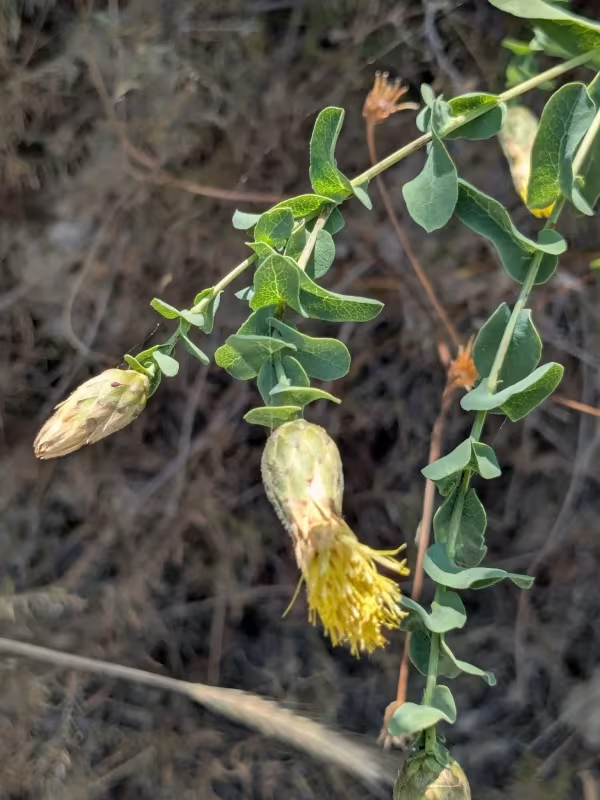
Description
Sowing dates
Sowing should be carried out in late autumn for winter stratification or in early spring after the seeds have undergone a cold treatment process for at least 40 days.
Seeds should be planted at a shallow depth of approximately 1 to 2 centimeters to ensure adequate oxygen access for the germinating seedlings.
For commercial cultivation, row spacing of 50 to 60 centimeters is recommended to facilitate the use of mechanical weeding equipment during the initial growth stages.
During the first year, growth is characterized by the formation of a basal rosette; during this phase, it is vital to maintain a weed-free area around each plant.
Transplanting seedlings grown in greenhouses is an effective method for establishing a uniform crop, provided that it is done after the risk of frost has passed.
Growing requirements
Klasea cerinthifolia is a perennial herbaceous plant belonging to the Asteraceae family. It is known for its remarkable hardiness and unique morphological structure that allows it to thrive in challenging environments.
The plant originates from the arid regions of Western Asia and the Caucasus. It is naturally adapted to rocky slopes and dry, open habitats, which defines its preference for well-drained soil.
Optimal growth requires light, porous soils with a neutral to slightly alkaline pH. Drainage is the most critical factor, as stagnant water is detrimental to the plant's long-term survival.
This species is highly drought-tolerant, exhibiting xerophytic characteristics. It performs best in full sun, where high solar radiation levels enhance its physiological and developmental processes.
Temperature requirements are moderate; the plant is capable of withstanding significant diurnal variations, which is characteristic of its natural steppe environment.
Main diseases and pests
The main threats to Klasea cerinthifolia include various types of root rot, which are triggered by soil moisture levels exceeding the plant's tolerance capacity.
Pests such as aphids and spider mites can infest the foliage, particularly during extended dry and hot periods when the plant is under physiological stress.
Effective management includes maintaining optimal planting density to ensure proper air circulation and implementing consistent monitoring of the plants.
Weed management is crucial, as the plant grows slowly in its early stages and can be easily overwhelmed by faster-growing opportunistic plant species.
Cultural practices, such as clearing debris from the field before winter, are essential to prevent the overwintering of pathogens and harmful insect larvae.