
Klasea centauroides
Klasea centauroides
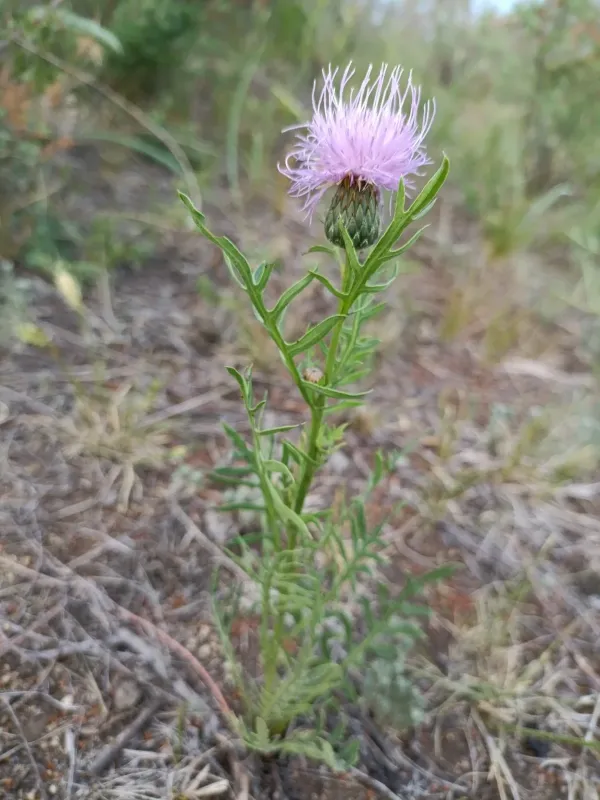
Description
Sowing dates
Klasea centauroides, belonging to the Asteraceae family, is a perennial herbaceous plant. In cultivation, seeds are sown mainly before winter or in early spring as soon as the soil warms up to 5-8 degrees Celsius.
To obtain uniform germination, preliminary stratification of the seed material for 30-45 days at low temperatures is recommended. The planting depth in light loamy soils should not exceed 1-2 centimeters.
When sowing, it is important to follow a row spacing of 45-60 centimeters, which ensures an optimal nutritional area for the plant's powerful root system. The crop is characterized by slow growth in the first year, forming a basal rosette of leaves.
In subsequent years of vegetation, the plant actively spreads, forming dense clumps, which requires periodic thinning of the crops. The optimal plant density at the moment of full productivity is about 15-20 specimens per square meter.
Propagation is possible not only by seeds but also by vegetative division of rhizomes, which allows for faster establishment of a field with the required density. Vegetative division is carried out during the dormant period — early spring or late autumn.
Growing requirements
The plant possesses high ecological plasticity, yet it prefers open, well-lit areas. The crop demonstrates excellent winter hardiness, making it suitable for cultivation in regions with harsh climates.
Soil requirements include moderately fertile, well-drained soils with a neutral or slightly alkaline reaction. Excessive moisture and groundwater stagnation negatively affect the development of the rhizome, causing root rot.
Klasea centauroides is distinguished by drought resistance thanks to its deeply penetrating root system. During initial growth phases, regular watering is required to maintain the turgor of young leaves and ensure normal root mass development.
The crop responds positively to the application of potassium-phosphorus fertilizers, which contribute to strengthening tissues and increasing overall resistance to adverse environmental factors. Nitrogen fertilizers are applied moderately, mainly at the beginning of the growing season.
An important element of agricultural practice is keeping the soil loose and timely controlling weed vegetation. Mulching between rows helps retain soil moisture and suppresses weed growth in the first half of the summer.
Yield
The economic use of the crop is oriented towards obtaining medicinal raw materials and decorative landscaping. The yield of dry aerial mass in industrial cultivation can reach significant indicators depending on the soil fertility and management.
Maximum productivity is achieved in the third or fourth year of life, when the plant fully develops its aerial part. The yield of raw material depends on planting density and maintenance, averaging from 15 to 25 centners per hectare.
As a fodder crop, the plant is used less frequently, although it has a valuable biochemical composition, including ecdysteroids. Its use in pharmacology determines the high value of the harvested material, making the crop promising for small-scale production.
The biological activity of Klasea extracts determines the demand for the plant from manufacturers of dietary supplements. Market value is determined by the concentration of active substances, which depends on the phase of collection.
To maintain stable yields, rotation of plots every 5-7 years is necessary, as the soil under perennial Klasea stands becomes depleted in certain micronutrients.
Main diseases and pests
Klasea centauroides possesses high phytosanitary resistance; however, if agricultural practices are not followed, it is susceptible to a number of pathogens. The main danger is posed by fungal diseases that develop in high humidity.
Often, powdery mildew infestations are observed, appearing as a white coating on leaves. Prevention involves maintaining spatial isolation and the timely removal of plant debris from the plot.
Among pests, various types of aphids feeding on the sap of young shoots can cause the most damage. To control pest populations, biological preparations are used that do not disrupt the ecological balance of the agroecosystem.
Damage to the root system by wireworms is possible in areas recently reclaimed after fallow land or perennial grasses. Agricultural control measures include deep autumn plowing and crop rotation.
Fusarium wilt is a serious threat during soil waterlogging. Preventing water stagnation and using high-quality, disinfected seed material allow for the almost complete elimination of the risks of plantation loss.
Harvesting
Harvesting the aerial part for medicinal purposes is carried out during the period of mass flowering. At this time, the concentration of biologically active compounds reaches its peak, ensuring the high quality of the final product.
Mowing is performed mechanically or manually at a height of 10-15 centimeters from the soil surface. It is important not to damage the basal rosette, which ensures the plant's regrowth in spring.
After mowing, the raw material is subject to immediate drying in the shade or in specialized dryers at a temperature no higher than 40-45 degrees. Rapid moisture removal prevents leaf blackening and the loss of active components.
For seed purposes, flower heads are collected as the involucres turn brown, preventing mass fruit shedding. After collection, the seeds are cleaned on sieve separators and brought to a standard moisture content of 8-10 percent.
Storage of commercial raw materials is carried out in dry, ventilated rooms in paper packaging. When storage conditions are observed, the medicinal properties of the Klasea remain stable for two years.