
Klasea nudicaulis
Klasea nudicaulis
Description
Growing requirements
Klasea nudicaulis is a perennial flowering plant belonging to the Asteraceae family. It is native to the steppe and rocky regions of Eurasia, where it has evolved to thrive in environments with specific sunlight and moisture conditions.
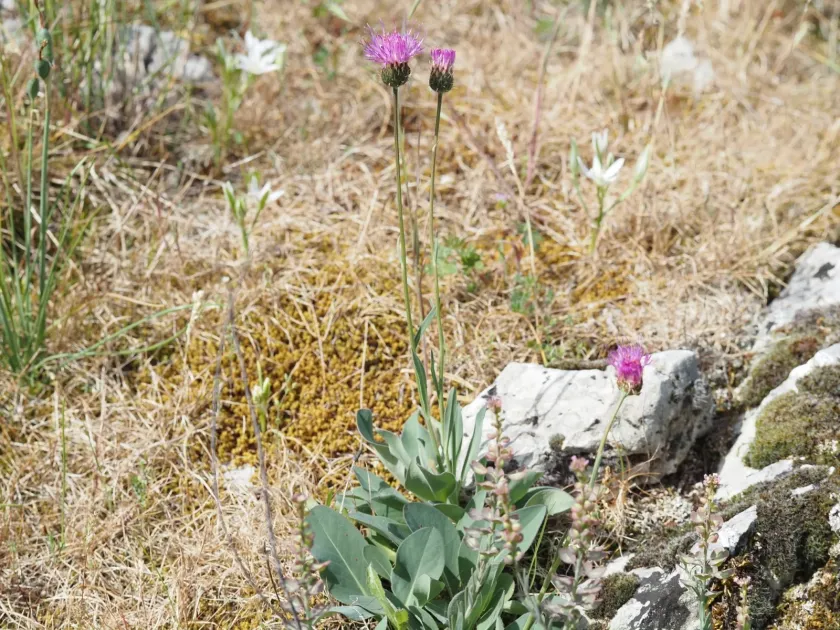
Botanically, the plant features a basal rosette of leaves and slender, upright stems topped with solitary capitula. Its root system is robust, allowing the plant to store nutrients and survive extended periods of limited water availability.
The plant demands high levels of solar exposure for optimal growth and development. When choosing a site for cultivation, it is essential to prioritize well-drained soil, as the species is highly susceptible to root damage caused by prolonged waterlogging.
Klasea nudicaulis is characterized by significant hardiness, displaying strong tolerance for both drought and cold weather cycles. These adaptations make it a candidate for low-maintenance agricultural or restorative land use projects.
The economic and agricultural utility of the species lies primarily in its potential as a source of medicinal extracts and its role in landscape restoration. The unique chemical profile of the plant is currently being studied for pharmaceutical applications.
Main diseases and pests
The main phytosanitary threats to Klasea nudicaulis include fungal pathogens, particularly those affecting the root zone. Ensuring excellent drainage is the most effective preventative measure against root rot diseases.
Pests such as aphids and flower-feeding beetles can occasionally cause damage to reproductive structures. Integrated pest management, focusing on early detection and maintaining beneficial insect populations, is recommended for healthy crop development.