
Klasea lycopifolia
Klasea lycopifolia
Description
Growing requirements
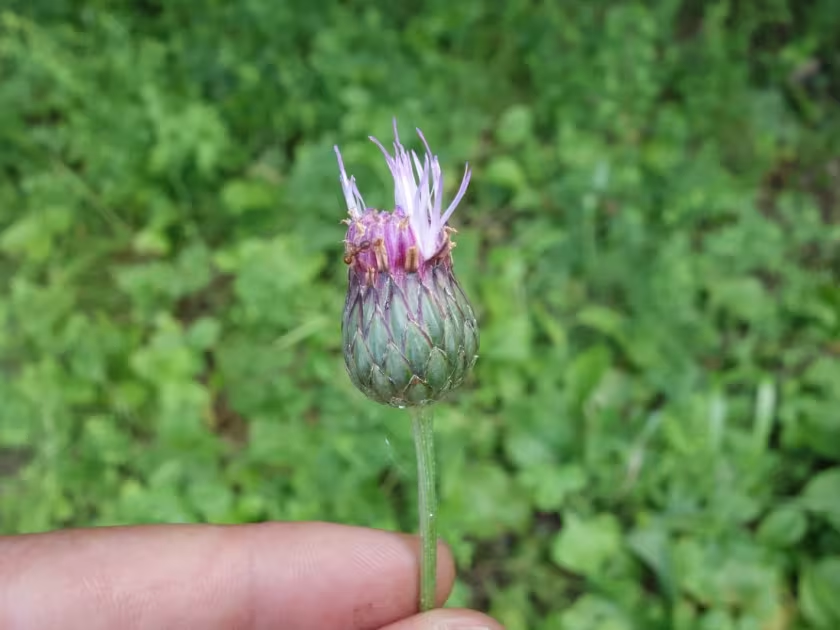
Klasea lycopifolia is a perennial herbaceous plant belonging to the Asteraceae family. Known for its adaptability, this species is native to the steppe and forest-steppe regions of Eurasia, where it thrives in open, temperate environments.
Botanically, the plant is distinguished by its robust, ribbed stems and uniquely shaped, serrated leaves that vary in structure along the stalk. This leaf morphology optimizes light capture across various development stages.
To achieve high productivity, Klasea lycopifolia requires well-drained, fertile soils with a neutral to slightly alkaline pH. Proper aeration is crucial to prevent root rot, which is the primary failure factor in waterlogged soils.
Climatic requirements involve sufficient solar radiation and moderate precipitation. While the plant is drought-tolerant once established, supplemental irrigation during the seedling phase is highly recommended for strong development.
Its agricultural value lies in its role as a significant nectar source and its potential as a medicinal crop. The phytochemical properties of its biomass are increasingly recognized in modern pharmacological research.
Main diseases and pests
Common phytopathological threats include fungal infections such as powdery mildew, which typically manifest under high humidity conditions and insufficient air circulation between individual plants.
Pest management is focused on controlling leaf-eating insects and aphids that can weaken the plant and reduce the overall quality of the harvested biomass during the growing season.
Standard agronomic practice advises keeping planting densities balanced to allow for adequate ventilation, which significantly reduces the risk of fungal spread throughout the field.
Crop rotation is essential for maintaining soil health and disrupting the life cycles of soil-borne pathogens that target the Asteraceae family plants specifically.
Integrated pest management strategies should prioritize the use of biological control agents and resistant varieties to ensure long-term sustainability of the Klasea lycopifolia crop.