
Tiger Aloe
Aloe variegata L.
Description
Growing requirements
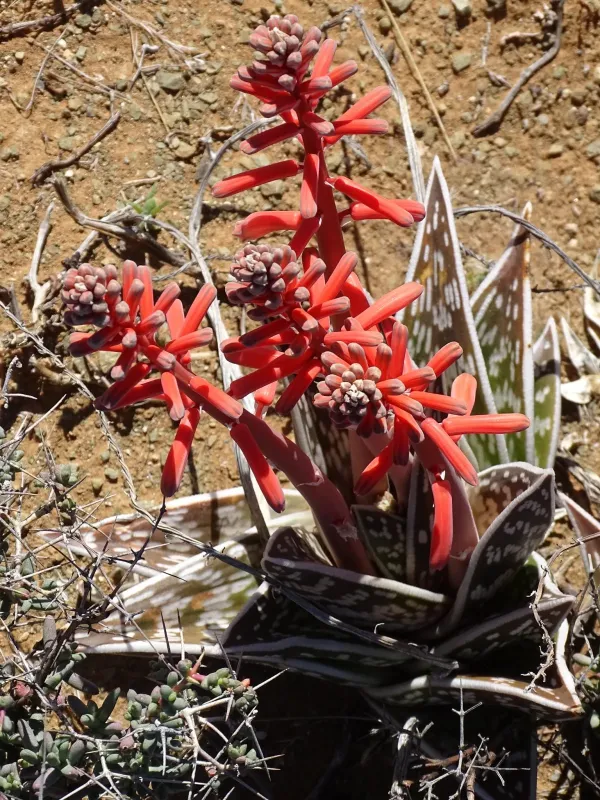
Tiger Aloe (Aloe variegata L.) belongs to the Asphodelaceae family. This succulent species is indigenous to the arid regions of South Africa, specifically the Cape Province, where it thrives in rocky terrain.
Botanically, it is a compact, stemless, or short-stemmed plant that reaches a height of 30 centimeters. The leaves are arranged in a distinctive triangular pattern and exhibit a unique spotted or striped variegation.
The culture requires bright, indirect light to maintain its vibrant leaf patterns. While it can withstand some direct sunlight, it should be introduced gradually to prevent scorching of the succulent tissue.
Soil requirements focus on high drainage capacity. A mixture of loamy soil and gravel or coarse sand is ideal to ensure that water does not remain stagnant around the root collar, which is critical for health.
Regarding agrotechnical practices, the plant demands a seasonal approach. During the active growth phase, moderate watering is necessary, while the winter dormancy period requires dry conditions and cool temperatures.
Main diseases and pests
Common pests affecting this culture include mealybugs and scale insects. These pests settle in the leaf axils, requiring manual removal or the application of specialized horticultural oils and insecticides.
Root rot is the most prevalent pathological threat, typically induced by poor drainage or overwatering. Maintaining dry substrate conditions and utilizing ceramic pots can significantly mitigate these risks.