
Aloe aculeata
Aloe aculeata Pole-Evans
Description
Growing requirements
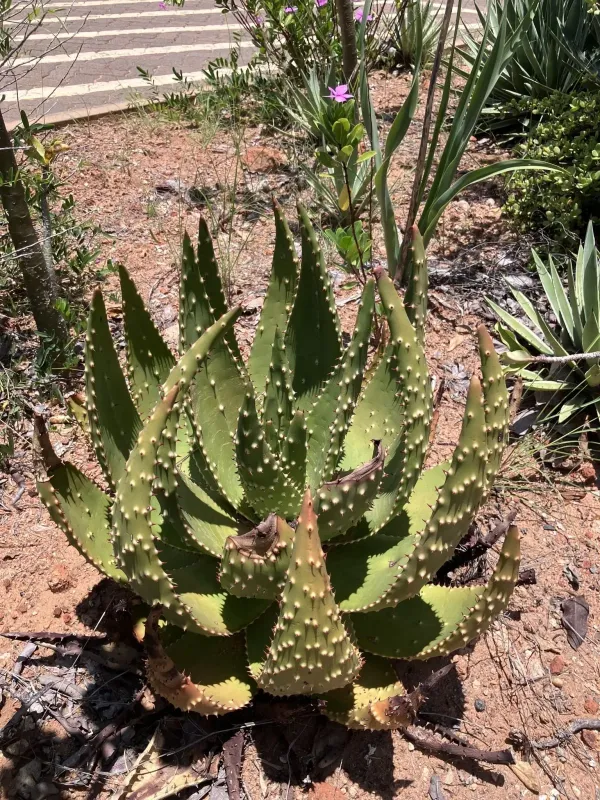
Aloe aculeata is a distinct succulent species belonging to the Asphodelaceae family. It is native to the rocky landscapes of South Africa, specifically within the Limpopo and Mpumalanga regions, where it has evolved to thrive in arid conditions.
The botanical structure of the plant features a solitary rosette of thick, fleshy leaves. The most defining characteristic is the presence of hard, reddish-brown spines located on both the upper and lower surfaces of the leaves, giving the plant its scientific name.
Cultivation of this species requires well-draining, sandy, or rocky soil. Because the plant is highly susceptible to root rot, drainage is the most critical factor in its management, whether grown in pots or open fields.
The plant requires full sun to maintain its compact, attractive growth habit. Exposure to insufficient light will result in etiolation, where the leaves become stretched, weakened, and prone to mechanical damage.
Watering requirements follow the standard succulent cycle: moderate moisture during the active growing season, with a significant reduction or complete cessation of water during the winter dormant phase to prevent moisture-related decline.
Main diseases and pests
Fungal pathogens represent the primary threat to the vitality of Aloe aculeata. These often manifest as root or crown rot, frequently caused by stagnant water or inadequate soil aeration during cool, damp periods.
Mealybugs are the most persistent pests affecting these succulents. They cluster in the leaf axils, creating a protective cottony substance and depleting the plant's nutritional resources, which can lead to stunted growth.
Scale insects can also infest the outer leaf surfaces. Due to their hard protective shells, they are resistant to many topical treatments, necessitating the use of systemic insecticides for effective control.
Proper sanitation is essential in any growing operation. Removing dead lower leaves and ensuring good ventilation helps mitigate the risk of pathogen buildup and improves overall plant health.
Integrated pest management strategies should prioritize physical removal of small infestations early on, combined with controlled environmental conditions to maintain the plant's natural resilience against further outbreaks.