
Aloe arborescens
Aloe arborescens Mill. x Aloe humilis (L.) Mill.
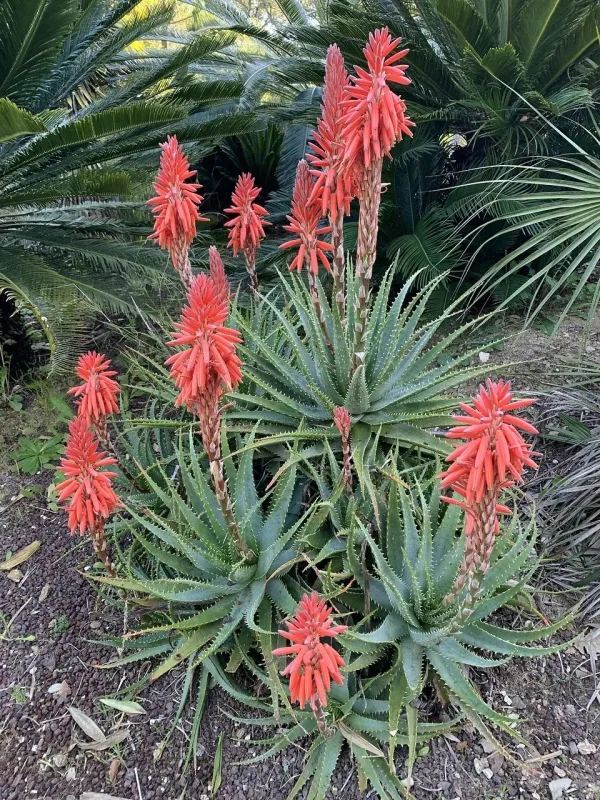
Description
Growing requirements
Aloe arborescens, commonly known as the candelabra aloe, is a species of flowering succulent plant in the Asphodelaceae family, native to South Africa.
This species thrives in warm, temperate climates and requires abundant sunlight to produce the chemical compounds that make it valuable for pharmaceutical use.
The soil must be well-draining, ideally a mix of sandy loam or cactus substrate, as the plant is highly susceptible to root rot in waterlogged conditions.
Temperature management is critical; while it can tolerate light frost for short periods, it performs best at temperatures between 20°C and 25°C.
Watering requirements are low; during the dormant winter period, the plant should be kept almost dry to prevent fungal infections and encourage spring flowering.
Yield
The commercial value of the crop is derived from its succulent leaves, which contain high levels of active medicinal compounds and minerals.
Optimal yields are achieved on plants that are at least 3-4 years old, as older leaves have a higher density of beneficial metabolites compared to young sprouts.
To maximize production, farmers often use controlled-release fertilizers rich in potassium, which helps the plant maintain turgor pressure and leaf mass.
In well-managed systems, plants can be harvested periodically throughout the year, provided they have enough time to regenerate their foliage.
Environmental control, particularly light intensity, significantly influences the biomass yield and the concentration of active ingredients in the leaf gel.
Main diseases and pests
The most common biological threats to Aloe arborescens include mealybugs, aphids, and scale insects that colonize the fleshy leaves and stems.
Fungal diseases like root rot and leaf spot are the primary risks, typically resulting from over-irrigation or inadequate drainage in the growing substrate.
Management of these threats involves a combination of mechanical removal, biological controls, and chemical applications if the infestation is severe.
Proper aeration and spacing between plants are essential to reduce humidity levels and discourage the development of common bacterial pathogens.
Regular monitoring of leaf health is recommended to catch infections early before they spread throughout the entire plantation.
Harvesting
Harvesting consists of pruning the mature outer leaves, which are typically the thickest and most nutrient-rich parts of the plant.
Tools used for harvesting must be sterilized to prevent the transmission of viruses or fungi from one plant to another during the cutting process.
Once removed from the main stem, the leaves are highly perishable and should be processed or refrigerated immediately to maintain their chemical integrity.
Sustainable harvesting practices involve taking no more than one-third of the total foliage at any given time to ensure the plant remains productive.
The peak harvest period usually follows the growth season, when the leaves are fully hydrated and packed with the desired plant metabolites.