
Aloe bakeri × Aloe glauca
Aloe bakeri Scott-Elliot x A. glauca Mill.
Description
Growing requirements
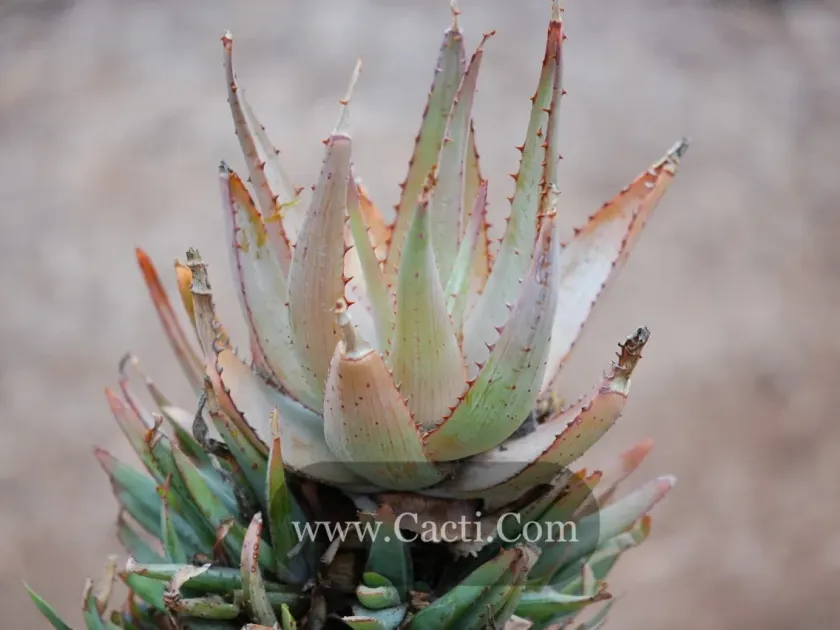
Aloe bakeri × Aloe glauca is a hybrid succulent belonging to the Asphodelaceae family. This crossbreed synthesizes the morphological characteristics of its parents, resulting in a plant that often displays the intricate, spotted foliage of A. bakeri and the robust, glaucescent growth habit of A. glauca.
The cultural requirements for this hybrid revolve around high light intensity. To maintain its compact rosette form and vibrant leaf coloration, it requires at least six hours of direct or filtered sunlight per day, particularly during the active growing season.
Soil composition is critical for this species. A highly porous substrate is mandatory to ensure rapid drainage. A mix of sandy loam, pumice, and expanded clay is recommended to prevent water logging, which is the primary cause of root failure in this specific hybrid.
Watering should be administered using the 'soak and dry' method. During the spring and summer, the plant thrives with consistent moisture, provided the substrate dries out completely between waterings. In autumn and winter, it enters a period of dormancy requiring minimal moisture.
This hybrid is primarily utilized in ornamental horticulture and xeriscaping. Due to its architectural appeal and relatively small size, it is a favored specimen for container cultivation and specialized succulent gardens in temperate climates.
Main diseases and pests
Root and stem rot caused by Phytophthora or Pythium species remain the most significant threat to the health of this hybrid. These conditions are almost exclusively triggered by overwatering or the use of poorly draining soil media.
Common succulent pests, including mealybugs and spider mites, are frequent visitors in glasshouse environments. Mealybugs typically hide in the leaf axils, producing cottony white masses, which can stunt the development of new leaves.
Spider mites thrive in warm, low-humidity conditions. Their activity manifests as microscopic stippling on the epidermis of the leaves, eventually leading to a dull, faded appearance if left untreated.
Integrated pest management suggests that the first line of defense is providing optimal airflow. Good ventilation reduces humidity around the crown of the plant, significantly inhibiting the growth of fungal pathogens and mite populations.
Chemical control should be employed with caution. Many succulent species are sensitive to oil-based sprays which can damage the epicuticular wax (glaucus layer) on the leaves. Always perform a patch test on a small area of the leaf before applying any pesticide across the entire plant.