
Little bell
Ipomoea triloba L.
Description
Growing requirements
Little bell (Ipomoea triloba L.) is a herbaceous vine species belonging to the Convolvulaceae family. While sometimes appreciated for its aesthetic value in tropical gardens, it is widely recognized as a significant agricultural weed that competes with essential field crops.
The species originated in the tropical regions of the Americas. Over the decades, it has expanded its range globally to include various warm-climate zones, becoming a troublesome invasive plant in agricultural landscapes throughout the world.
Little bell thrives in areas with high ambient temperatures and consistent moisture. It exhibits a rapid growth rate, allowing it to colonize disturbed soils and cultivated fields effectively by climbing over crops and depriving them of vital sunlight.
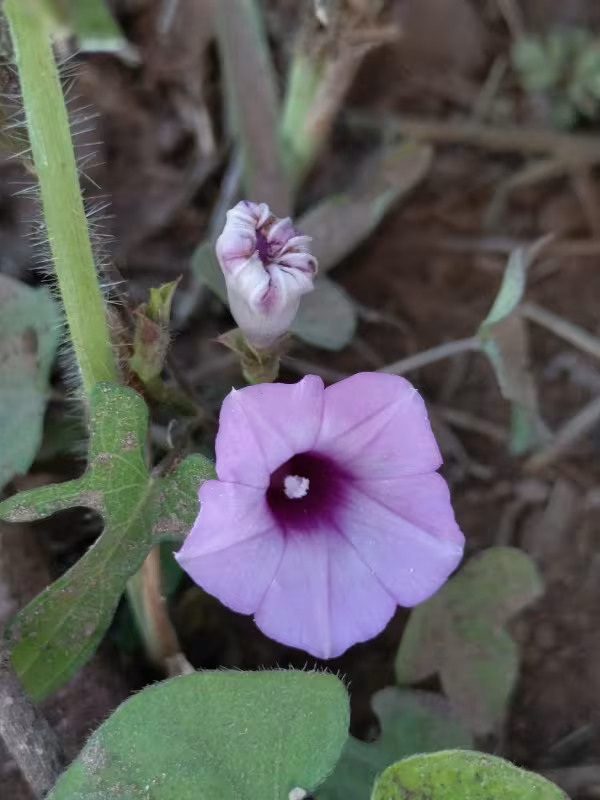
Botanically, the plant is identified by its trilobed leaves and small, funnel-shaped flowers that bloom in shades of pink or purple. It possesses an extensive root system that facilitates nutrient uptake, giving it a competitive edge over domesticated plant varieties.
In farming, Ipomoea triloba is not considered a productive crop. Instead, its presence is a signal for urgent weed control measures, as it significantly impairs the yield of legumes, maize, and other staple crops through competition and mechanical interference.
Main diseases and pests
This plant is a known host for several plant viruses and pathogens, serving as a reservoir for infections that can easily spread to valuable crops like sweet potatoes and peppers.
Insect pests, including various aphids and leaf-eating beetles, often use the little bell as a habitat, which increases the pest load in surrounding agricultural areas.
Effective control is challenging because of the plant's high seed production, which ensures a persistent seed bank in the soil that can remain viable for several years.
Integrated weed management, combining mechanical tillage and the use of post-emergence herbicides, is the most common approach to minimizing its impact on production.
Preventative strategies such as using weed-free seeds and maintaining healthy, high-density crop stands are essential to prevent the establishment of this vine in new fields.