
Ipomoea carnea
Ipomoea carnea Jacq.
Description
Growing requirements
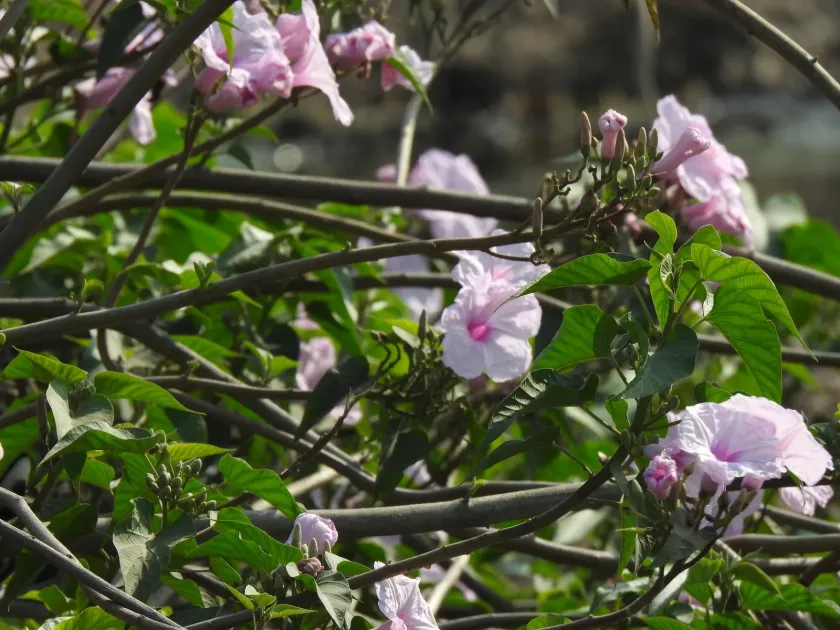
Ipomoea carnea (also known as the pink morning glory) is a perennial shrub belonging to the Convolvulaceae family. Unlike its vining relatives, this plant develops robust, upright stems that can reach significant heights, often forming dense clusters in native environments.
Originating from the tropical regions of Central and South America, Ipomoea carnea thrives in warm, humid climates. It requires full sun exposure to maintain its vigorous growth and produce an abundant display of funnel-shaped pink flowers.
Soil requirements for this crop are relatively flexible, but it prefers well-draining, fertile loams with adequate moisture retention. The plant is notably tolerant to waterlogged conditions, making it suitable for areas where other ornamental shrubs might struggle.
Agronomic management involves regular watering during dry spells and periodic pruning to maintain shape and density. Pruning is essential not only for aesthetics but also to stimulate fresh growth and improve the overall vigor of the plant.
Because the plant is sensitive to frost, it is primarily grown in regions with stable tropical or subtropical temperatures. In cooler climates, it must be protected or treated as an annual plant, which requires specific greenhouse management.
Main diseases and pests
Spider mites are the most common pest associated with Ipomoea carnea, particularly during periods of low humidity. They thrive on the undersides of leaves, causing discoloration and eventual leaf drop if left unmanaged.
Fungal diseases, such as powdery mildew, often occur when the planting density is too high or air circulation is poor. Proper spacing during initial planting is the best preventative measure against these infections.
Root rot represents a significant risk if the soil remains waterlogged for prolonged periods without sufficient aeration. While the plant likes moisture, it must have a functional drainage system to prevent pathogen buildup in the rhizosphere.
Integrated pest management (IPM) strategies, including the use of neem oil or targeted miticides, are recommended for controlling infestations. Always rotate chemical treatments to prevent pests from developing resistance.
Regular sanitation of the plantation, including the removal of dead or decaying biomass, is crucial for maintaining plant health. This reduces the primary habitat for potential pathogens and insect pests.