
Cairo morning glory
Ipomoea cairica (L.) Sweet
Description
Sowing dates
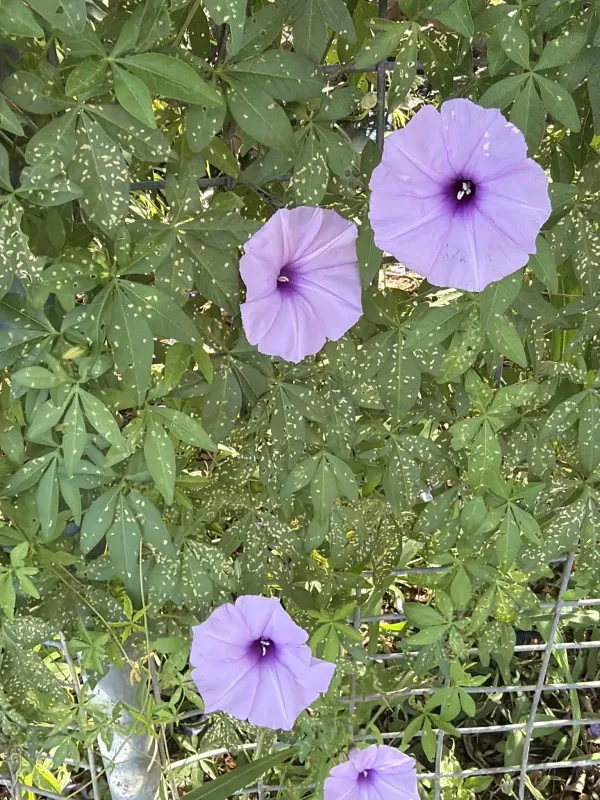
Cairo morning glory (Ipomoea cairica) is a perennial evergreen climber belonging to the Convolvulaceae family. Due to its sensitivity to frost, it is commonly cultivated as an annual in cooler climates.
Propagation is typically achieved through seeds, which should be sown indoors in late March or early April. Soaking the seeds in warm water for 24 hours prior to planting significantly improves germination rates.
When starting seeds, it is recommended to use individual pots to prevent root disturbance. Seedlings are transplanted outdoors only after the risk of frost has passed and the soil has sufficiently warmed up.
Spacing between plants should be approximately 30 to 45 centimeters to allow for healthy air circulation. This spacing helps prevent the development of foliage diseases during the peak of summer.
Cuttings can also be used for vegetative propagation, offering an effective way to replicate successful specimens. Softwood cuttings placed in a moist medium typically root within a few weeks.
Growing requirements
This species thrives in full sun, which is essential for prolific blooming and strong vine growth. Providing at least six to eight hours of direct sunlight daily is critical for the plant's health.
The soil should be fertile, well-draining, and rich in organic matter. While the plant can tolerate a variety of soil types, it performs best in slightly acidic to neutral garden loam.
Consistent watering is necessary throughout the growing season, particularly during prolonged dry spells. However, it is vital to avoid waterlogging, which can cause root rot and yellowing leaves.
As a vigorous climber, Cairo morning glory requires sturdy support structures such as trellises, arbors, or fences. Its twining stems will naturally scale these structures, creating a dense green curtain.
Regular fertilization with a balanced, low-nitrogen liquid fertilizer will support continuous flowering. Excessive nitrogen encourages leafy growth at the expense of floral development.
Main diseases and pests
Common pests include aphids and spider mites, which can infest the foliage, particularly in hot and dry conditions. Regular monitoring is essential to detect these pests before they cause significant damage.
If an infestation occurs, horticultural oils or appropriate systemic insecticides can be applied to manage the pest populations. Keeping the plant hydrated helps it withstand minor pest pressure.
Fungal issues such as leaf spot and powdery mildew can occur, especially in humid environments with poor air circulation. Removing infected plant parts helps control the spread of disease.
Root rot is a major threat caused by overwatering or poorly drained soil. Ensuring that the planting site has good drainage is the most effective way to prevent this condition.
Sanitation practices, such as removing debris and dead foliage from around the base of the plant, are essential. A clean environment reduces the habitat for potential pests and soil-borne pathogens.