
Ipomoea carnea
Ipomoea carnea Jacq. subsp. fistulosa (Mart. ex Choisy) D. F. Austin
Description
Growing requirements
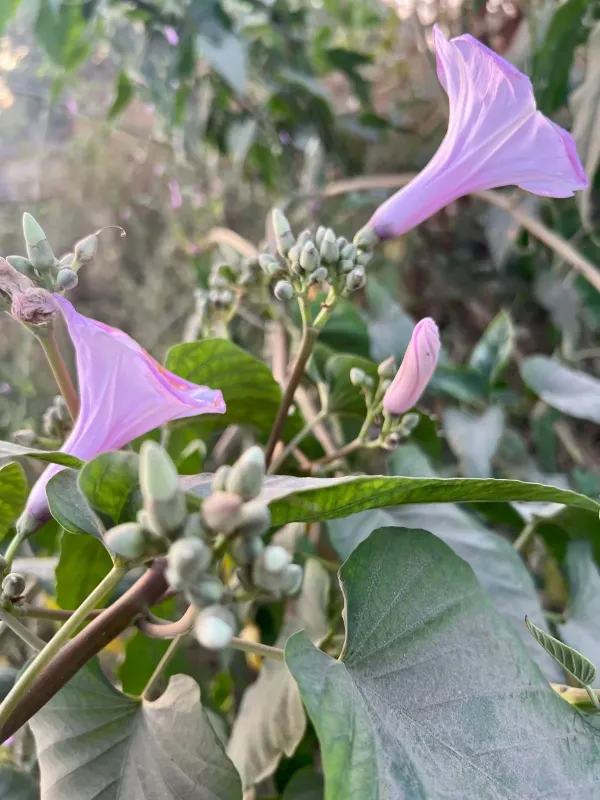
Ipomoea carnea subsp. fistulosa, commonly known as bush morning glory, is a perennial shrub belonging to the Convolvulaceae family. It is characterized by its woody stems, hollow branches, and trumpet-shaped pink flowers, which make it both an ornamental and a functional crop.
Originating from South America, this plant has spread across many tropical and subtropical regions. It exhibits remarkable adaptability to various environments, thriving in both flooded wetlands and arid conditions, which highlights its biological versatility.
The crop requires full sun exposure and warm temperatures to maximize biomass production. It is highly sensitive to cold, and its growth is severely hindered by temperatures falling below freezing point, making it unsuitable for temperate agricultural zones.
Soil requirements are relatively low; however, the plant responds well to moist, nutrient-rich soils. Due to its robust growth, it is effectively used in phytoremediation projects and to stabilize riverbanks, preventing soil erosion in tropical climates.
From an industrial perspective, Ipomoea carnea is valued as a raw material for pulp and paper manufacturing. Its rapid growth cycle allows for frequent harvests, positioning it as a sustainable source of cellulose in specific tropical regions.
Main diseases and pests
The crop is susceptible to several foliage-feeding insects, with larvae of various hawk moths (Sphingidae) being the most destructive. These pests can rapidly defoliate large stands of the plant if left unmonitored.
Fungal diseases, specifically leaf spot and powdery mildew, pose a significant risk during high-humidity seasons. These infections compromise the structural integrity of the leaves and reduce overall biomass quality.
Viral infections transmitted by sap-sucking insects like whiteflies are common in warm climates. Managing insect vector populations is an essential part of the integrated pest management program for this crop.
Root-knot nematodes can cause significant damage to the plant's root system. This usually occurs in fields where the crop is grown continuously without rotation, leading to stunted plant height.
Effective management strategies should focus on preventive measures. Due to the presence of alkaloids in the plant, it is generally unpalatable or toxic to livestock, requiring careful handling during site management.