
Ipomoea plebeia
Ipomoea plebeia R. Br.
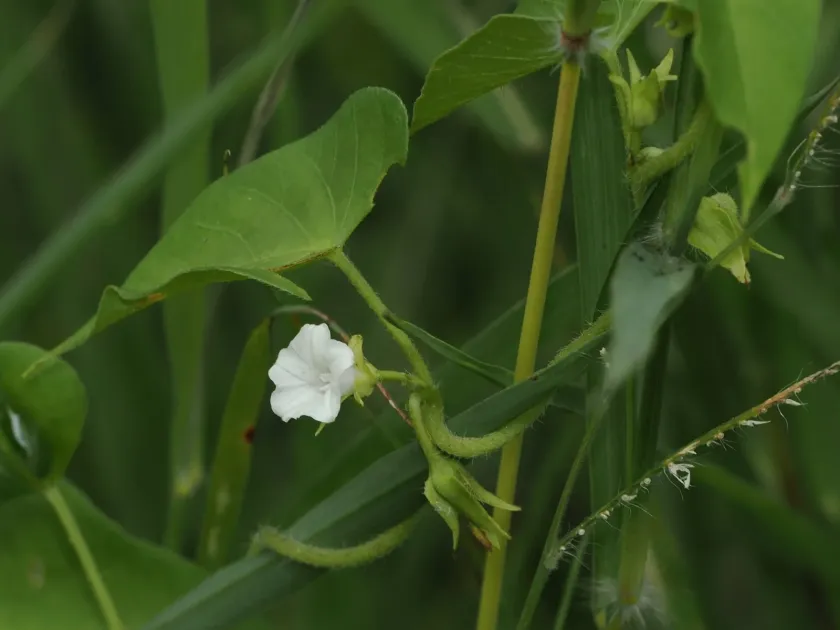
Description
Growing requirements
Ipomoea plebeia R. Br. is a plant species belonging to the Convolvulaceae family. It is a climbing herb native to specific subtropical regions, most notably found in Australia, where it thrives in diverse open habitats.
The plant requires high solar radiation and consistent warmth to reach its physiological potential. Ideally, ambient temperatures should range from 22 to 30 degrees Celsius, as the species is highly sensitive to frost and cold environmental conditions.
Regarding soil, Ipomoea plebeia performs best in well-drained, fertile sandy loam or silty soils. Proper aeration is crucial to prevent root zone suffocation, especially during the seedling stage when the root system is actively expanding in the topsoil layer.
Botanically, this species is defined by its trailing or twining habit. The foliage is typically cordate, and the flowers are funnel-shaped, characteristic of the genus. Its rapid growth rate allows it to cover significant ground area in a short duration under optimal moisture conditions.
In terms of agricultural utility, research is focused on its adaptability to hot climates. It is sometimes evaluated for its potential in land rehabilitation or as a ground-covering plant that suppresses invasive weed species while maintaining soil structure stability.
Main diseases and pests
The primary pests affecting Ipomoea plebeia include leaf-feeding beetles and aphids that can cause significant damage to young vegetative parts. Monitoring during the early growth stages is essential for maintaining plant health and crop density.
Fungal pathogens like powdery mildew are common in environments with low airflow and high humidity. Ensuring adequate spacing between plants is a primary agricultural practice recommended to reduce the incidence and severity of these infections.
Root rot caused by soil-borne fungi remains a threat, particularly in poorly drained fields. Implementation of proper irrigation scheduling and field leveling is necessary to avoid waterlogging, which often precipitates the development of root-based diseases.
Viral pathogens transmitted by insect vectors can significantly hinder plant growth, often requiring rigorous field sanitation measures. Clearing surrounding vegetation that might act as an alternative host for these vectors is highly recommended for crop security.
Finally, competition from fast-growing weeds in the initial phases is a challenge for successful establishment. Early-season mechanical weeding or mulching serves to minimize competition for nutrients and water, allowing the Ipomoea to establish dominance over the plot.