
Rough balsam
Impatiens scabrida DC.
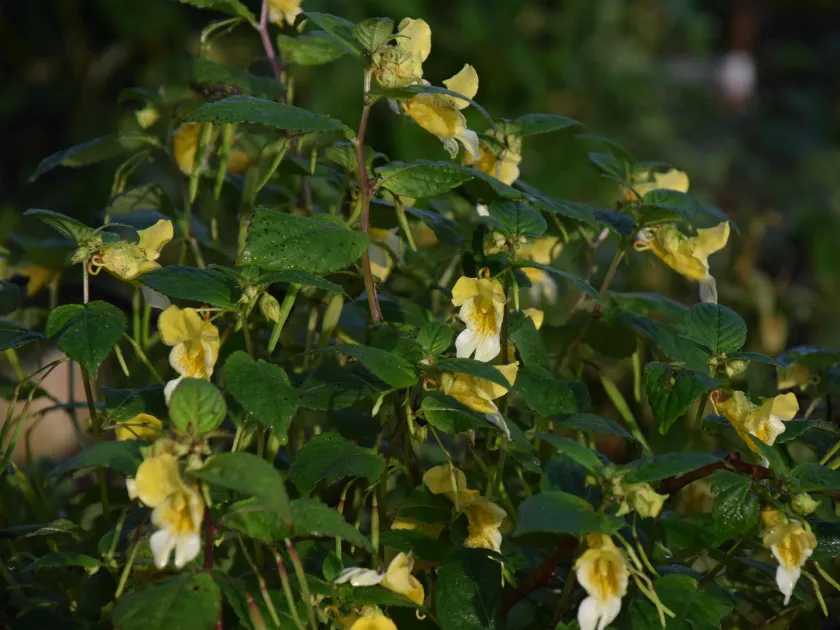
Description
Sowing dates
Rough balsam (Impatiens scabrida) is a member of the Balsaminaceae family, known for its unique botanical features. In temperate regions, seeds are typically sown in early spring in indoor trays, usually 8–10 weeks before the last frost date.
The seeds require light to germinate, so they should be surface-sown on a fine seed-starting mix and pressed gently into the medium. Maintaining high humidity and a constant temperature of about 20–22 degrees Celsius is essential for successful germination.
Seedlings should be kept in a well-lit area but away from direct, harsh sunlight. Once the second set of true leaves develops, the young plants can be transplanted into larger containers to allow for root development before the final outdoor planting.
Direct sowing in the garden is only feasible in regions with mild climates where the soil remains warm. In cooler areas, it is advisable to wait until the night temperatures consistently stay above 15 degrees Celsius.
For uniform growth, space the plants at least 25–30 centimeters apart. This spacing encourages bushy development and reduces the risk of overcrowding, which can lead to poor plant health.
Growing requirements
Impatiens scabrida thrives in partial to full shade, making it an excellent choice for woodland gardens or north-facing borders. Intense, direct sun causes leaves to scorch and wilts the flowers very rapidly.
The soil must be rich in organic matter, well-draining, and consistently moist. It prefers a slightly acidic to neutral pH level. Improving heavy clay soils with compost or peat moss is highly recommended before planting.
Consistent moisture is key; the soil should never dry out completely between waterings. However, waterlogging must be avoided, as stagnant water is a primary cause of root-related failures in this species.
Regular application of a balanced, water-soluble fertilizer throughout the blooming season will support continuous flower production. Avoid high-nitrogen fertilizers that encourage leafy growth at the expense of blossoms.
The plant performs best in sheltered spots, as the stems can be brittle and susceptible to wind damage. In very dry climates, regular misting or placement near water features can help maintain the needed humidity.
Main diseases and pests
Powdery mildew is the most frequent fungal issue, often appearing as a white dusting on leaves during periods of high humidity and poor air circulation. Proper spacing and thinning help significantly in prevention.
Aphids can cause damage by congregating on the undersides of leaves and on succulent new shoots. They extract plant sap, which can lead to distorted growth and the spread of viral infections if left untreated.
Spider mites are a common pest in low-humidity environments, especially during hot summer months. Regular monitoring for fine webbing or stippling on the leaves is essential for timely intervention.
Root rot, typically caused by Pythium or other soil-borne fungi, occurs in saturated soils. Keeping the planting site well-drained is the most effective cultural method to protect the plant from such pathogens.
If an infestation or infection is spotted, affected parts should be pruned immediately. For severe cases, applying appropriate horticultural oils or systemic fungicides, following the product labels, is necessary to save the crop.