
New Guinea impatiens
Impatiens New Guinea Group
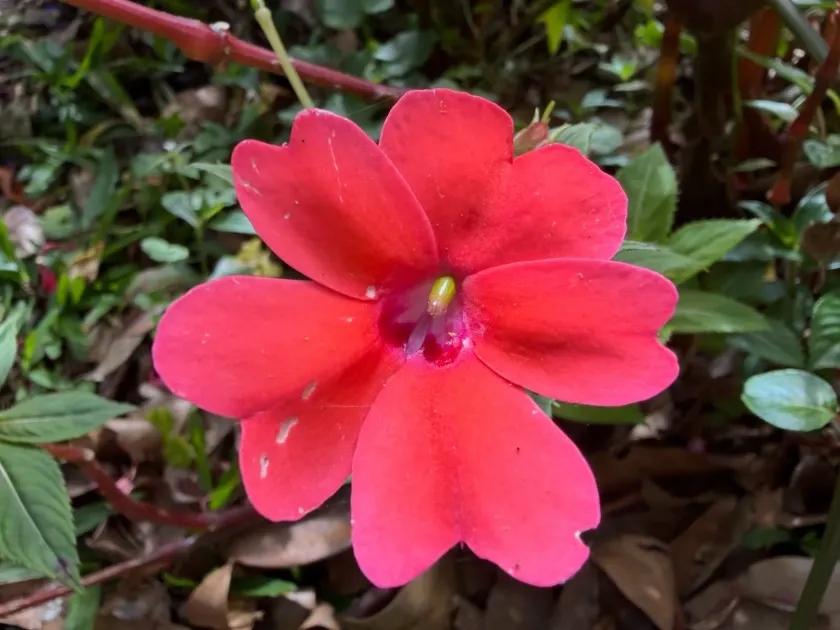
Description
Sowing dates
Sowing of New Guinea impatiens seeds typically occurs in late winter, usually from January to March, to ensure flowering plants by the start of the season.
Success depends on maintaining a steady soil temperature between 22 and 24 degrees Celsius to facilitate germination.
Seeds are light-dependent, so they should be sown on the surface of the soil and merely pressed down rather than covered with a thick layer of substrate.
Germination is often slow and uneven, taking approximately 14 to 20 days, during which consistent humidity must be strictly maintained.
Using a humidity-controlled propagator or a plastic cover is recommended to keep the microclimate stable for the delicate young seedlings.
Growing requirements
New Guinea impatiens, belonging to the Balsaminaceae family, is a hybrid group developed from species native to the island of New Guinea.
These plants thrive in loose, nutrient-rich, and well-draining potting mixes with a slightly acidic pH level between 5.5 and 6.5.
The culture requires a moderate light environment, as intense midday sun can scorch the foliage while deep shade reduces flower production.
Proper water management is critical; the soil must remain moist, but growers must avoid waterlogging to prevent root suffocation and disease.
In terms of usage, this crop is a staple in the ornamental industry, widely used for hanging baskets, patio containers, and shaded landscape beds.
Main diseases and pests
Fungal diseases, especially Pythium root rot, are the primary threats caused by excessive irrigation or poor drainage in the growing medium.
Powdery mildew often attacks the foliage when humidity is high and air circulation is insufficient, leading to a white, dusty appearance on the leaves.
Spider mites are the most persistent pests, thriving in the warm, dry conditions often found in indoor environments, causing yellowing and webbing.
Whiteflies can also cause significant stress, congregating under leaves and transmitting viruses while weakening the plant through sap feeding.
- Root rot (Pythium)
- Powdery mildew
- Spider mites (Tetranychidae)
- Whiteflies (Aleyrodidae)