
Impatiens auricoma
Impatiens auricoma Baill.
Description
Growing requirements
Impatiens auricoma is a perennial herbaceous plant belonging to the Balsaminaceae family, native to the Comoros Islands. In an agricultural context, it is primarily cultivated as a high-value ornamental crop prized for its rare, vibrant golden-yellow flowers.
The crop thrives in temperate climates with steady temperatures between 18°C and 25°C. It is highly intolerant to frost, making it ideal for greenhouse production or as a potted plant in regions with cold winter seasons.
Soil requirements involve a well-draining, nutrient-rich substrate with a slightly acidic to neutral pH. Proper soil structure is essential to prevent waterlogging, as the succulent stems are highly susceptible to root rot in poorly aerated mediums.
Regarding light, this species prefers filtered sunlight or partial shade. Excessive direct solar radiation can damage the leaf tissue, whereas insufficient light leads to stem elongation (etiolation), which negatively impacts the plant's aesthetic value.
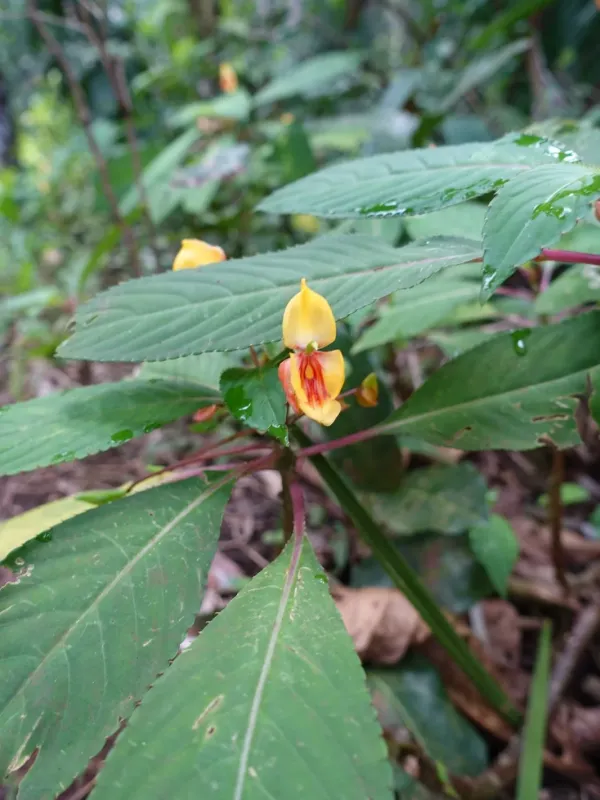
Botanically, Impatiens auricoma features succulent, branched stems and lanceolate, serrated leaves. The unique golden flowers arise from the leaf axils, providing a distinct appearance that differentiates it from common bedding impatiens species.
Main diseases and pests
Spider mites represent a significant threat to the crop, especially in dry environments with low humidity. These pests feed on the cell sap, causing stippling and eventual chlorosis of the foliage.
Whiteflies are another common pest in protected environments. They cause damage by sucking nutrients from the leaves and secreting honeydew, which fosters the growth of sooty mold and reduces photosynthetic efficiency.
Root rot, often caused by Pythium or Phytophthora species, is the most common disease associated with overwatering or poor substrate drainage. It typically results in sudden wilting and tissue decay starting from the root zone.
Powdery mildew may occur if the plants are crowded and airflow is restricted. Symptoms include a characteristic white, dusty coating on the leaves and stems, which can be managed with systemic fungicides and improved ventilation.
Effective management includes regular scouting for early pest detection, maintaining proper spacing to ensure airflow, and using sterile media to prevent soil-borne pathogens from establishing themselves within the crop.