
New Guinea Impatiens
Hybrids between Impatiens flaccida and Impatiens hawkeri
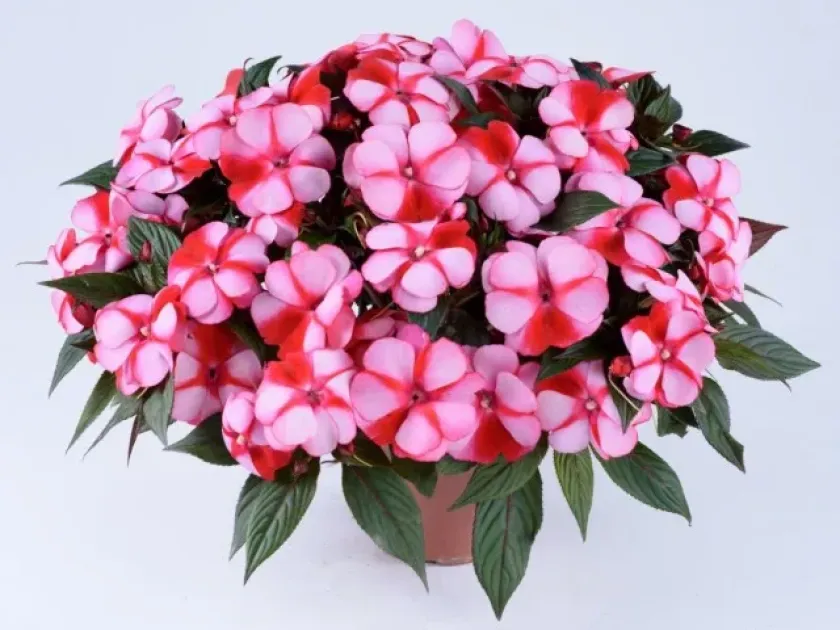
Description
Sowing dates
Sowing seeds of New Guinea Impatiens typically occurs in late winter, from late February to early March, to ensure healthy seedlings for spring planting.
Seeds should be sown on the surface of a fine, moist potting mix and should not be covered deeply, as they require light to germinate effectively.
Maintaining a temperature between 22 and 24 degrees Celsius is crucial during the germination phase to ensure a consistent and high success rate.
Once the seedlings develop at least two sets of true leaves, they should be transplanted into individual containers to allow for optimal root development.
It is important to acclimatize the plants before moving them outdoors, ensuring the night temperatures have stabilized above 15 degrees Celsius.
Growing requirements
New Guinea Impatiens belongs to the Balsaminaceae family and is a product of complex hybridization involving species native to the island of New Guinea.
These plants prefer partial shade, though many modern cultivars are specifically bred to handle brighter, direct sunlight if moisture levels are maintained.
A well-draining, nutrient-rich soil with a slightly acidic pH is ideal for the vigorous growth of these ornamental plants in both garden beds and containers.
Consistent irrigation is vital, as these plants do not tolerate prolonged dry spells, which lead to wilting and the loss of developing flower buds.
Good ventilation is necessary to prevent high humidity from causing fungal issues, especially in crowded greenhouse or display settings.
Main diseases and pests
The most common pests affecting these plants are spider mites, especially during warm, dry periods when the air humidity is insufficient.
Whiteflies can also cause significant damage by feeding on the sap, leading to stunted growth and the spread of viral or fungal infections.
Root rot, primarily caused by Pythium species, occurs when plants are overwatered, leading to the collapse of the stem and root system.
Powdery mildew may manifest as a white dusty coating on the leaves, usually appearing during periods of poor air circulation and high humidity.
Effective management includes maintaining hygiene, providing adequate plant spacing, and applying approved horticultural pesticides only when necessary.