
Impatiens namchabarwensis
Impatiens namchabarwensis R. J. Morgan et al.
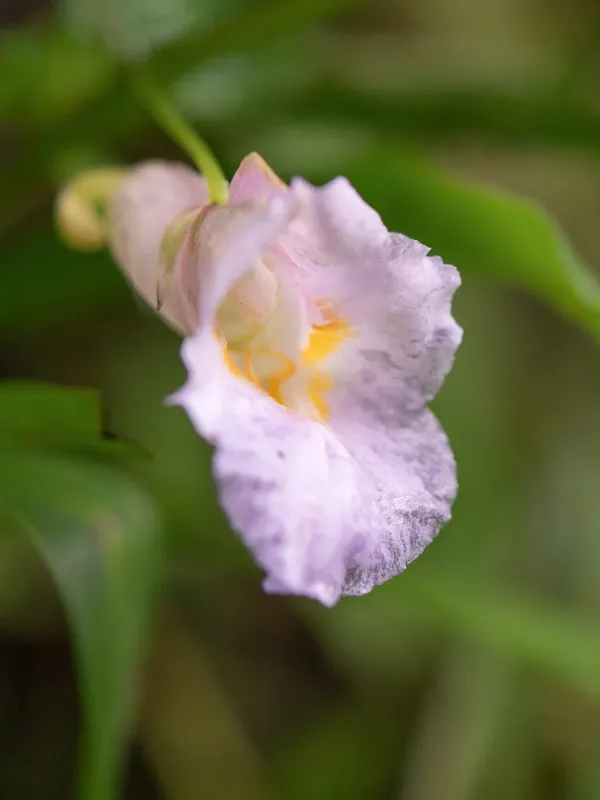
Description
Sowing dates
Sowing seeds of Impatiens namchabarwensis is best executed in late winter or early spring to allow the plant to establish before the peak of summer heat.
Seeds should be sown on the surface of a light, peat-based substrate, ensuring they remain in contact with moisture without being buried too deeply.
Maintaining a temperature range of +22–24°C is crucial, and the use of a humidity dome is recommended until the seeds successfully germinate.
Once seedlings have developed two sets of true leaves, they should be carefully transplanted into individual small pots with excellent drainage.
During the early growth stages, providing consistent indirect lighting is essential to prevent etiolation and promote healthy, compact stem development.
Growing requirements
Impatiens namchabarwensis belongs to the Balsaminaceae family and originates from the high-altitude regions of Tibet, specifically the Namcha Barwa gorge.
The plant thrives in cool, humid environments and performs best when protected from extreme heat, preferring temperatures that do not exceed +28°C.
Bright, filtered light is the ideal lighting condition, as direct sunlight can easily scorch the delicate foliage and damage the ornamental flowers.
The soil medium must be highly porous and moisture-retentive, typically composed of peat moss, perlite, and a small amount of organic compost.
High relative humidity is essential for this species, making it a perfect selection for cool greenhouses, terrariums, or well-ventilated indoor spaces.
Main diseases and pests
Spider mites are the most common pest problem for this species, especially when the indoor air humidity falls below the recommended threshold.
Overwatering or poor substrate aeration frequently leads to root rot, caused by opportunistic fungi like Pythium that attack the delicate root system.
Powdery mildew can emerge during periods of fluctuating temperatures, characterized by a white dust-like coating on the surface of the leaves.
Whiteflies and aphids can settle on the undersides of the leaves, weakening the plant by siphoning sap and spreading potential viral infections.
To maintain plant health, it is vital to keep the environment well-ventilated and to monitor the moisture level of the substrate continuously.