
Himalayan balsam
Impatiens glandulifera Royle
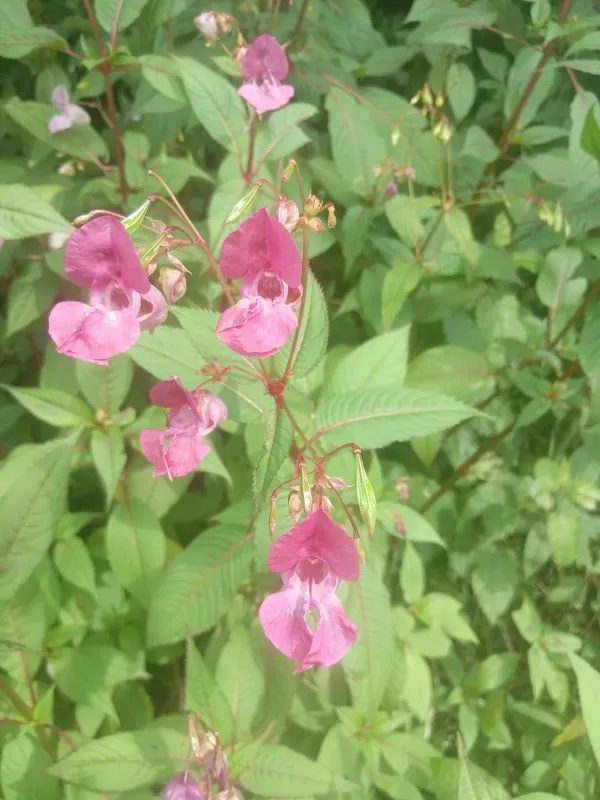
Description
Sowing dates
Himalayan balsam is an annual herbaceous plant that propagates solely through seed dispersal. Seeds require a period of cold stratification to break dormancy, making autumn sowing ideal for natural germination.
When sowing in spring, seeds must be kept in cool, moist conditions for several weeks to ensure a satisfactory germination rate, otherwise, the success rate is minimal.
The plant demonstrates high vigor, quickly occupying the available space. In agricultural settings, it is crucial to manage plant density to prevent excessive overshadowing of other crops.
Seeds remain viable in the soil for up to two years, which necessitates careful site planning to prevent unwanted re-emergence in subsequent seasons.
Proper spacing of approximately 50–60 cm is recommended to ensure each plant receives sufficient light and nutrients, leading to robust development.
Growing requirements
As a member of the Balsaminaceae family, this species thrives in moisture-rich environments. It is frequently found in moist soils, such as riverbanks, damp meadows, and forest edges.
The plant prefers semi-shaded areas but adapts well to full sun provided that the water supply is constant. Drought is the primary limiting factor for its growth and vitality.
The ideal temperature range for active growth is 18–25 degrees Celsius. It is highly sensitive to frost, with the entire plant typically dying back once temperatures drop below zero.
Rich, loamy, and well-draining soil provides the best conditions for its rapid vertical growth, which can reach heights of up to 3 meters in a single season.
Protection from strong winds is advisable, as the succulent and hollow stems are fragile and prone to mechanical damage or snapping.
Yield
The economic value of this plant is primarily linked to its role as a prolific nectar source. It is highly attractive to honeybees, offering significant nectar production late in the season.
The biomass production of the Himalayan balsam is substantial. Its rapid growth cycle allows it to produce a large volume of organic matter within a few months.
Seed production is extraordinary, with a single mature plant capable of dispersing thousands of seeds through its explosive capsule mechanism.
While often treated as an invasive weed in many regions, in controlled environments, it has been studied for its potential in producing high-quality floral honey.
However, its yield must be balanced against the management costs associated with containing its rapid spread into surrounding natural or agricultural habitats.
Main diseases and pests
Himalayan balsam is remarkably resilient against most common agricultural pests due to the chemical composition of its tissues.
In conditions of high humidity and poor air circulation, the plant may suffer from grey mould or other fungal pathogens affecting the stems and leaves.
Powdery mildew can occur during hot, humid summers, particularly if the plants are stressed by inconsistent water levels or overcrowding.
Spider mites are occasionally observed, specifically during prolonged dry spells when the plant’s natural defenses are slightly weakened.
The greatest threat associated with this plant is its aggressive displacement of native vegetation, which often necessitates rigorous manual or mechanical control strategies.
Harvesting
Seed harvesting should be performed with extreme caution. The seed capsules are highly sensitive and will eject seeds at the slightest touch once they reach maturity.
For agricultural control purposes, cutting or mowing the plants before they reach the flowering and seed-setting stage is the most effective method of population management.
Nectar collection by bees occurs naturally throughout the flowering period, which typically lasts from mid-July until the first frost in autumn.
After the growth cycle, manual removal of the stalks is recommended to avoid leaving dense debris on the soil surface, which can harbor pests or fungal spores.
Harvested material should be destroyed rather than composted, as the seeds are hardy and can easily survive standard home composting temperatures.