
Passion flower hybrids
hybrids between Passiflora cincinnata Mast., Passiflora incarnata L., Passiflora edulis Sims f. flavicarpa O. Deg., Passiflora kermesina Link & Otto and Passiflora miersii Mart.
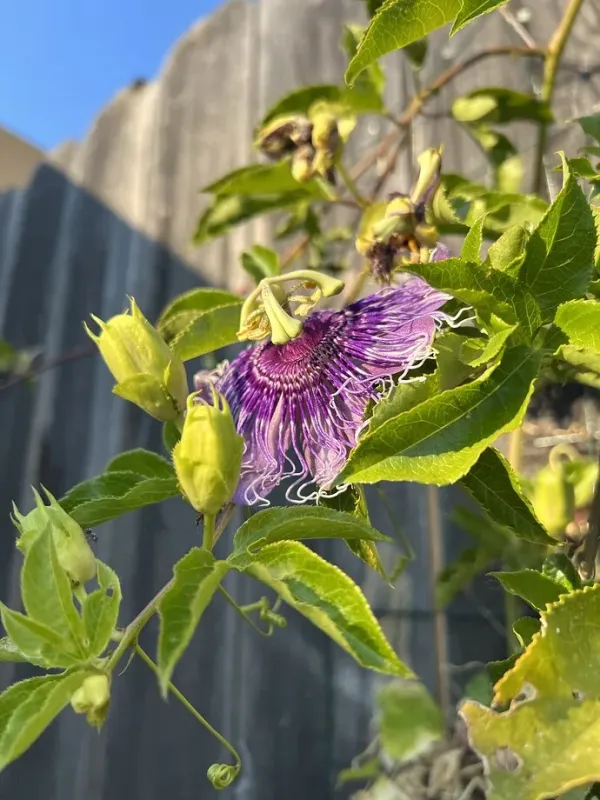
Description
Sowing dates
Sowing seeds of complex passion flower hybrids should be done in late winter or early spring to allow the plants enough time to establish before the main growth season.
Seeds benefit significantly from scarification or a 24-hour soak in warm water to soften the seed coat, which is naturally hard and resistant to moisture.
Maintain a soil temperature between 25°C and 28°C for optimal germination. Using a heating mat under the seed trays is highly recommended for faster emergence.
Once the seedlings develop their first true leaves, transplant them into individual pots, ensuring that the roots are not damaged during the process.
Only move the plants to their final location when the ambient temperature is consistently above 15°C and the risk of frost has passed completely.
Growing requirements
These hybrids are part of the Passifloraceae family and thrive in locations with full sun exposure, although they require protection from strong winds that can shred foliage.
Well-draining, nutrient-rich soil with a slightly acidic to neutral pH is ideal. Waterlogging is a major risk, so adequate drainage systems must be provided.
Given their tropical origin, these plants require consistent moisture but are sensitive to root rot. Mulching is recommended to retain moisture in the topsoil.
Since they are vigorous climbers, sturdy trellis systems or support structures are essential to ensure proper air circulation and ease of harvest.
Regular fertilization with high-phosphorus and potassium fertilizers will support the heavy energy demands of flowering and fruit development.
Yield
Yields are highly dependent on successful pollination. In controlled environments, manual cross-pollination may be necessary if pollinating insects are absent.
Plants generally begin to flower and produce fruit by the second growing season, reaching peak productivity in the third or fourth year.
Cross-breeding different species, such as P. edulis and P. incarnata, allows for improved flavor profiles and adaptation to slightly cooler climates.
Each mature plant can yield dozens of fruits per season, provided the vines are properly pruned to maximize sunlight exposure to the flowering sites.
Harvesting should be optimized by monitoring the fruit’s weight and fragrance, which are the best indicators of maturity in complex hybrids.
Main diseases and pests
Spider mites and whiteflies are the most common pests, particularly in greenhouse settings where air is dry and ventilation may be suboptimal.
Fungal pathogens such as Fusarium wilt and Phytophthora can affect the root system, especially if the soil is too wet or lacks aeration.
Viral infections, often spread by aphids, can cause leaf mottling and significantly reduce fruit set; early control of vectors is critical.
Powdery mildew can become a problem in humid conditions with poor air circulation, requiring appropriate fungicidal intervention or preventative spraying.
- Regular monitoring of the underside of leaves.
- Sterilization of pruning tools to prevent spread.
- Maintenance of a balanced plant nutrition program.
Harvesting
Fruit harvesting is performed as the skin color changes to its characteristic deep hue, signifying that the sugars have reached their peak level.
It is important to handle the fruit carefully to avoid bruising, which can lead to rapid decay and a decrease in shelf life.
If the fruit is for fresh consumption, harvest when it starts to pull away slightly from the vine; for commercial shipping, harvest slightly earlier.
Store harvested fruits in a cool, ventilated place. Avoid stacking them in deep piles to prevent damage to the lower fruits in the batch.
Continuous harvesting throughout the season encourages the plant to maintain a steady production cycle rather than exhausting itself at once.